Browsed by
Author: hortoris

Grow Your Own Cheap Violas
Grow Your Own Cheap Violas

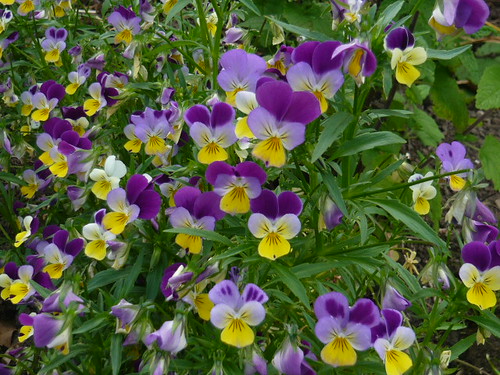
Viola self sown

Violas are perennial and grow best in well drained soil that has an open structure to encourage fibrous roots and promote many stems from the same root. They may get a bit leggy so cut back two or three times during the spring and summer to encourage new shoots and more flowers. Aid this by applying a liquid rose fertilizer or seaweed and keep watered.

Violas do not have the ‘blotch’ of the pansy but may have dark rays in the blue yellow or mauve petals. Violettas are very similar but with smaller flowers, compact habit and a good fragrance.

Many violas self seed but I try and collect seed from plants that I like. Sow the fresh seed on the surface of the compost but exclude light until they germinate in about 2 weeks.

Propagation to get more Violas for Free

  • In the second week of June cut plants back to within 2 inches of the soil.
  • When the shoots grow back to 3 inches long scatter some fine soil mixed with peat, amongst the shoots and keep well watered.
  • In two or three weeks the shoots will have rooted and can be replanted in a shady spot
  • Pinch out the growing tip to encourage branching
  • Divide plants every two or three years in Spring as they start to grow or in Autumn but the results may not be as good as the rooted cuttings.
  • Alternatively sow fresh seeds in July. Cover lightly but then exclude light for a few weeks until they have germinated. transplant in October to flower next spring.

Violas in Rockery

Read More Read More

Create a Stumpery from Tree Roots and Stumps

Create a Stumpery from Tree Roots and Stumps

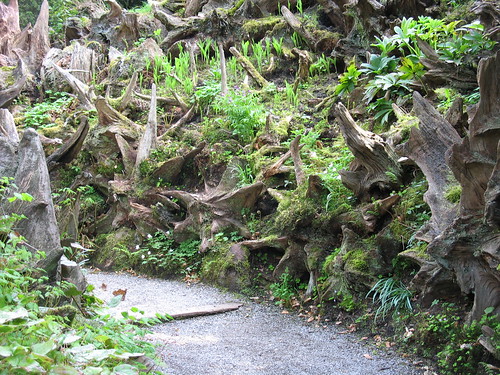
Stumpery - Biddulph Grange Garden - Biddulph

The objective of a Stumpery is to create a garden feature from ferns, logs and old tree roots. The Victorians started a trend to build Rooteries, Ferneries and Stumperies as romantic woodland places to grow exotic ferns and woodland plants. If you have a dark corner or want to collect ferns then you could start your own Stumpery quite easily and add to it as the fancy takes you.

Construction of a Stumpery

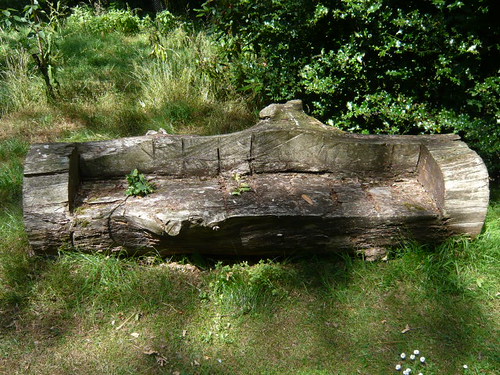
  • Old trees are the basic raw material.
  • Up rooted tree stumps like those after a big storm or pulled out by chains form a great base
  • Gnarled and twisted shapes work well to create form and shape
  • Just cutting trees down to stumps can be enough in a small garden
  • If you live in or near the countryside finding logs and tree stumps should be relatively easy.
  • In a suburban gardens a few pieces of trunk from felled sycamore can form the basis for a mini-stumpery.
  • Drift wood old branches or any wood artfully arranged can also be used
  • Bark chippings can unite the feel for the area

Eco-Friendly Stumps

  • Different wild life to that found in tidy gardens love stumperies.
  • Fungus can thrive on decaying wood and moist conditions.
  • Insects and small mammals have a place to hide, feed and multiply

Plant Up with some Ferns

  • Mosses and lichen can be encouraged by painting uncovered surfaces with yoghurt
  • Ferns should be planted in spaces between stumps and roots. They like dark places without fertiliser but some leaf mold can be added to the soil.
  • Chose a variety of ferns for shape, size and colour.
  1. Matteuccia Ostrich feather fern upto 3 feet
  2. Dyopterarias erythrosora has elegant fronds that emerge bright orange and change to lime-green as they age.
  3. Harts Tongue fern Phylitis has a smoother leaf and sword shape
  4. Athyriums like the Japanese painted fern (niponicum pictum,) and Lady fern are smaller but can  light up very dark places.
  5. Adiantum pedatum is a small maidenhair fern with a fragile appearance but a hardy nature. It has a running rootstock that quickly makes a respectable clump.
  • Snowdrops, celandines,primroses and foxgloves may grow well in semi shaded areas or on the edge of the Stumpery.
  • If planting Bluebells make sure they are the native kind not the hybrid or Spanish variety

More information on Ferns is available on http://www.ferns.com/

Photograph of Stumpery at Biddulph Grange Garden – Biddulph by westher, on Flickr under creative commons license.

What is a Coronary Garden

What is a Coronary Garden

memorial

A Coronary Garden was more popular in late Victorian times but as I discovered it goes back beyond the 17th century.
Coronary gardens were  used to grow flowers that could be used for wreaths and garlands and take their name Coronary from the word crown not the health problem.

The modern day equivalent is probably the florist shop or stall located at Crematoria

This photograph is not a true Coronary garden but a memorial garden in front of the cenotaph at Otley.

Tips for the Coronary Garden (1686)

  • Do not separate off sets from Tulips until they are quite dry.
  • Cotton Lavender makes a foot high hedge or border if kept well clipped.
  • A layer of stable litter under the soil that is planted with Tulips, Anemonies and Ranunculus will help them thrive. They my survive without lifting.
  • To grow Stock Gillyflowers chose a plant with excellent double flowers. Make it beare one branch of flowers and collect the seed. Sow in February in the hot bed and transplant in Michaelmas (September).

Note about Stock Gillyflower. – I originally took it to mean Carnation or Pinks of the Dianthus family but other plant dictionaries include stocks like Matthiola incana, or say stock gillyflower is the Cheiranthus; the queen’s gillyflower is the Hesperis or even any of several Old World plants cultivated for their brightly colored flowers.

Wordswarmnet Dictionary for Stock Gilly Flower

Plants for the Coronary Garden

  • Lilies in red, white, Crown Imperial or Persian.
  • Tulips, Crocus, Narcissus or Anemonie for spring
  • Snap dragons, Sweet Williams and Gladiolus
  • Iris and Fritillaries.
  • Daisies, Pansies and Violets
  • Various annuals or exotics like Amaranthus and Heliotrop.

The tips and flower selection have been taken from ‘ Directions for The Gardiner at Says- Court in 1686’. They were published in a wider more embracing form in ‘Directions for the Gardiner and Other Horticultural Advice’ by John Evelyn the diarist and OUP available via Amazon

The original manuscript was first transcribed in 1932 by Sir Geoffrey Keynes

Book Cover

Daisy Daises a 20,000 Strong Family

Daisy Daises a 20,000 Strong Family

062

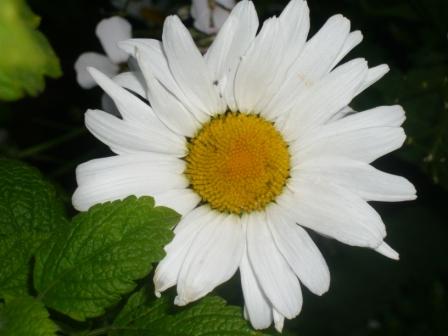
One gardeners Daisy is another gardeners weed. This Ox- Eye daisy is made up from numerous white ray flowers surrounding a bright yellow disk flower or florets the outer white petals are common in many daisies. Bellis perennis is the common daisy growing in meadows and many lawns. Lots of children will be familiar with the Daisy chains made by linking flowers together.

More exotic daisy plants can be discovered in this comprehensive guide.

Book Cover
Daisies are from the Asteraceae or Compositae family that has over 20,000 species from over 1500 genera that includes the Asters, Senicio and Sunflowers.

Read More Read More

Growing Coloured Conifers

Growing Coloured Conifers

Burton Agnes Pocklington

Conifer trees and plants are available in a range of colours, shapes and sizes. Sequoia conifers are the largest living thing on the planet. Mature trees reach for the skies but rockery or horizontalis varieties are ground hugging by comparison.

What is a Conifer

  • A conifer is a tree that produces seed but has no true flowers.
  • Many conifers have seeds borne on scales that clump together to form cones which are woody when ripe.
  • Junipers and Yews are conifers without cones, using small berries for seed capsules.
  • The foliage is usually narrow and sharp-pointed or small and scale-like.
  • Most conifers are evergreen though Larches loose there their needles annually

Conifer Families

  • The Pine family includes several popular species of conifer including, Firs (Abies), Spruce (Picea abies), Larch (Larix), and Cedars (Cedrus).
  • The big trees like the giant redwood sequoia are from the Taxiadacea family.
  • Monkey Puzzle trees have very large cones.
  • Cypress family includes the Chamaecyparis, Juniperus, Thuja and Cupressus families most often found in gardens.

Colourful Conifers
There are a range of different greens, blues, gold’s, greys and even bronzes. Have a look around your local garden centre. Five varieties to look out for are:

Read More Read More

Good Companions Crocosmia and Euphorbia

Good Companions Crocosmia and Euphorbia

Burnby Hall Pocklington

You only need subtle shade changes to achieve a striking effect with well chosen plants. Good companions complement one another in a range of ways.

These Euphorbia and Crocosmia work well together due to the shape and forms of the leaf and the similarity and warmth of colour.
Crocosmia will flower in a hue like that of the Euphorbia but later in the summer – see images.

For more information on Euphorbia read Top Ten Euphorbias

For more pictures and growing tips on Crocosmia see link

Burnby Hall Pocklington

These Malva moschata are easy to grow perennials that flower strongly in mid summer. The pastel shade of pink is also picked out in the eye of the virtually white flower.

Read More Read More

Growing Sedum or Stonecrop

Growing Sedum or Stonecrop

014

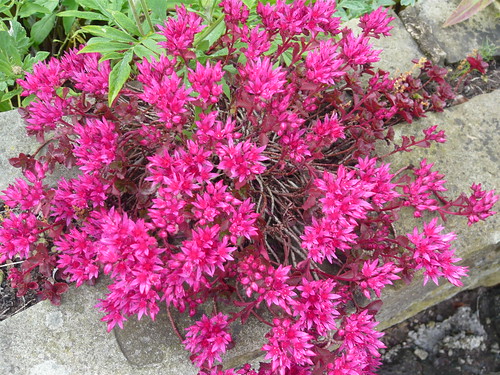
A small name but a large, 400 strong, species. There are many Sedum or Stonecrop family of plants to grow.

Growing Tips

  • Sedum is a succulent plant that stores water in it’s leaves.
  • As with other succulents they are often cultivated with Cacti but are easy to grow in a garden.
  • Sedum varieties can make good ground cover from rose-shaped growths in shades of green, yellow and pink.
  • Sedum are not heavy feeders and do not need good soil. That is why the above plant is growing in my wall.
  • Sedum thrive best in full sun or a good light.

The Sedum society has a seed distribution and cuttings service.  Read more on Sedum and Saxifrages or Sedum Ice Plants

Sedum Matting

Read More Read More

Growing Runner Beans in a Dry Summer

Growing Runner Beans in a Dry Summer

031

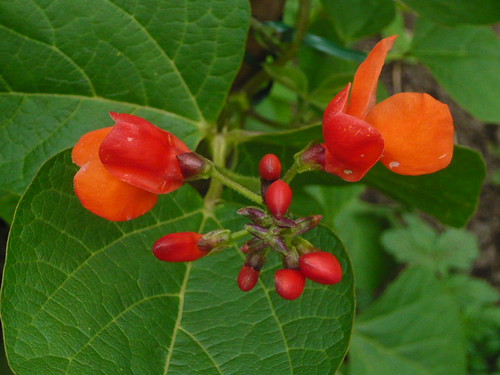
Great Runner Beans need plenty of water retentative and nutrient rich soil. That is why preparation is important but here are some more tips to rescue this years crop.

Preparing Runner Bean Bed

  • Help the soil to retain moisture by incorporating manure, well rotted compost and wet newspaper at the bottom of a deep 12″ trench in winter.
  • Maintain humus rich soil around and above the trench with more compost.
  • Rotate crops to a new patch every year on a three or four year cycle.
  • Use a 2-3″ deep mulch that is open enough to take water down to the roots. Bark chippings may suit.

Plant Out Runner Beans

  • Start off your beans in pots with a deep root run or in open ground.
  • Do not feed with heavy nitrogen fertilisers or you will get leaf and less flower.
  • Support each plant with a cane in a wigwam shape.

Growing On

  • Flowers pollinate best if the air is humid so mist over during a dry spell. I use a ‘Sprayer’ with clean water.

    Read More Read More

Sustain Your Sustainable Garden

Sustain Your Sustainable Garden

Green Island Garden

To coin a phrase ‘Sustainable Gardening is for Life not just a passing fancy’. It is easy to drop sustainable gardening when it gets tough but here are a few tips to help you stay the distance.

Composting

  • Good compost contains huge, free food resources and conserves moisture in the soil. You know you could do more.
  • Save money on fertilizer by adding Comfrey leaves to compost bins to boost nitrogen content.
  • Do not put animal and fish bones on the compost heap but you can crush and bury these bones.
  • Wormeries and worm bins will eat food waste and produce good soil conditioner.

Water Conservation

  • It is more popular to save water when the drought starts but the wise gardener has already got solutions in place. But me more  Butts.
  • Harvest water, it saves money if you are on a meter, even grey water is of use.
  • Use drought tolerant plants such as Alpines and Mediterranean plants.

Recycle, Repurpose and Reuse

  • Pruned stems can be used as plant supports and cut logs can go in a wood pile.
  • Various bits of packaging can be used as planters.
  • Reuse plant pots or donate them to charities who sell plants and are always asking me for contributions.
  • Stones from a rocky part of the garden can improve drainage in another or be used to create a soak-away.

Encourage Wildlife

  • Log Piles and brash piles save landfill and help insects and fungi.
  • Companion planting can attract particular pest predators.
  • Wild life encourages a natural balance in your garden.
  • Leave areas of lawn unmown or create natural garden areas.

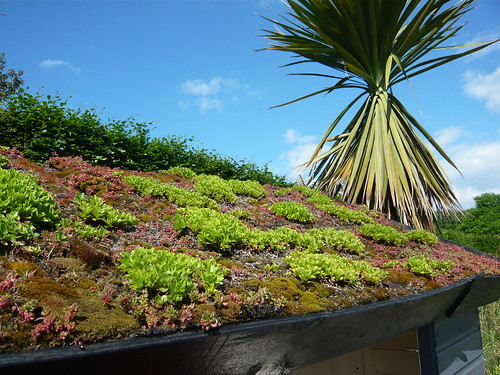
golden acre green roof

Green roofs are sustainable food, water and heat resources, read about Harlow Carr

Extraordinary Leaves in Pictures

Extraordinary Leaves in Pictures

Book Cover
Extraordinary Leaves by Armytage and Schrader is available from amazon.

The horticultural industry put most of it’s effort into flowers, trees and shrubs. Leaves however appear on all most all these plants and repay close inspection.
As this book Extraordinary Leaves shows there is an amazing world out there for those who look closely and want to find new visual and sensual experiences.

Leaves

Ptilostemon casabonae

Read More Read More