Browsed by
Author: hortoris

The Flora of West Yorkshire F A Lees

The Flora of West Yorkshire F A Lees

My winter pastime is to sort and dispose of some of my many gardening books. My collection has grown even more  invasive than the worst weeds and it is time hoe them out. Charity shops will be beneficiaries as will our local gardening club but the recycling industry will get 500 or so books. I thought of composting but I will leave that to the landfill which still contains all those old telephone directories.

Bearing in mind my local heritage and garden location one book that is worth a mention is ‘The Flora of West Yorkshire’ by Frederic Arnold Lees (1847-1921). My copy is a professional 1978 facsimile of the first edition of 1888.

Interesting Facts

  • Lees was Leeds born and schooled and became a member of The Royal Colleges of Surgeons and Physicians
  • He also Presided over the botanical section of the Yorkshire Naturalists’ Union and was recorder for the Botanical Record Club
  • Frederic collected plant material for Leeds medical school and his book collection of 535 items is retained by Bradford reference library.
  • The book contains 2.000 references in a comprehensive index and starts with information on Climatology and  Lithology as it pertains to botany. This shows how weather and under lying rock and soil structure influences the species that thrive in various conditions
  • Observations – Victorians and Edwardians took great care to study the natural world and invest time and energy in study. This work helped classify the wild  flora discovered in West Yorkshire in that era.


Peat is Disappearing from Compost

Peat is Disappearing from Compost

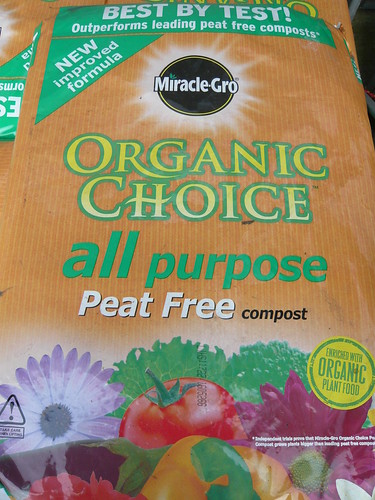
Peat free compost

Commercial compost is a range of products sold in plastic wrapping in garden centres, DIY shops and sundry retailers. This is not to be confused with your own garden compost made from decomposed plant matter.
The contents of these types of commercial compost vary and can affect the growing result considerably. All have a base which has no or negligible nutritional value plus additives that make it useful for a specific purpose.

Typical Compost Constituents – Base

Peat base of small fibers of bog peat is excellent for many purposes but now seen as none ecofriendly due to the over extraction of peat and lack of replenishment of the resource which isn’t sustainable.
Coir as a peat substitute for the base. Coir is made from the hairs & fibers of coconuts and such compost are widely available. There are special organic compost products approved by the vegan society .
Wood pulp based composts and partially composted bark are other bases the industry is trying to develop into retail products but mixes and formulas keep changing
Steralised loam based composts, generically called John Innes after the guy who first formulated them, tend to be heavier.
Composted green waste is becoming popular if you can find a reliable supplier who uses non-diseased raw materials

Typical Commercial Compost Constituents – Additives

Most composts are mixes of some of the base ingredients and possibly sand or vermiculite to open up the compost and improve drainage
Fertilisers are added that are appropriate to the end use. seed compost needs less fertiliser than a container planting compost where a plant has to live for at least a season
A wetting agent is often added as peat is very difficult to get wet and you need an even moisture in a pot or seed tray.
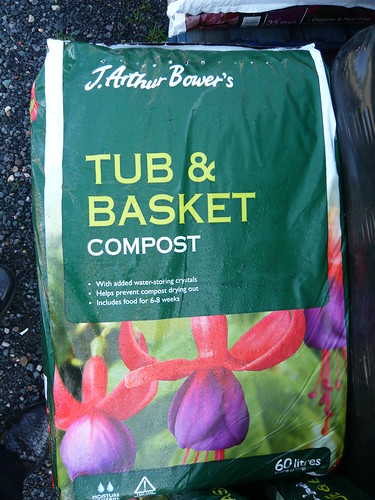
Water retaining gels may be added for hanging basket compost.

high trees 055

Typical Compost for Special Uses

Rooting and cutting compost is usually just a mix of sand loam and peat
Seed compost has crushed limestone and phosphates added to help drainage an promote root growth
John Innes No1, 2 & 3 has varying quantities of fertilisers; hoof and horn, superphosphate and potassium sulphate . No 1 Potting Compost is for pricking out young plants, No 2 Potting Compost is for potting on and No 3 Potting Compost is for established plants and shrubs.
Ericacious compost is for acid loving plants like Rhododendrons and lime hating plants like Mahonia and has flowers of sulphur added to the peat based mix.
Cactus compost, Bonsia compost, Orchid compost, Citrus plant compost even African Violet compost are all available from a range of suppliers. One brand with a range available in many outlets is Westland http://www.gardenhealth.com/latest-news.php
Bulb compost used to be called bulb fibre and has no fertiliser . It is used for bulbs like Hyacinths that have already got a store of energy to produce a flower.

Tips On Compost

As it is an organic product the quality can be variable but there will be a brand you like so try some out – currently I am using Arthur Bowers and B&Q own label.
Mix in a bit of grit, sand, vermiculite or water preserving gel depending on how you plan to use the compost
Try keep it uniformly moist.
Add a drop of liquid soap to the water to restrict the growth of moss on seed compost used for slow germinating seeds.
Grow bags contain compost and are a cheaper way of buying compost than small bags.
Compost deteriorates with age so buy fresh compost from a commercial supplier with a fast turnover.

First Posted: April 10th, 2012 |on Gardening Products    

Garden and Natural Art

Garden and Natural Art

For the winter months I reduce my time in the garden and use art as a replacement hobby. I remember that over 1o years ago our sister site focused on Garden Products. There was a category for Garden Art Products and a selection of updated posts is below. The full range can be accessed on this link
Garden Art

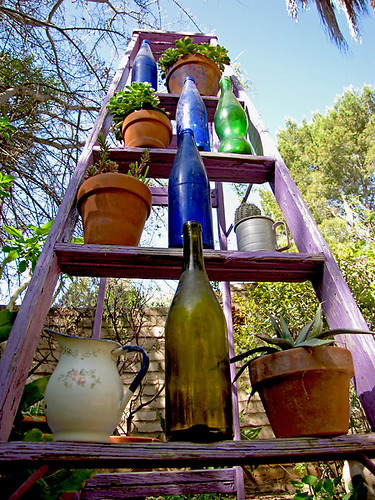
Tucson Botanical Bottle Garden? Not quite, but artistic bottles in the garden.
If you have the bottle to produce your own art then give freedom to your bottled up instincts.

A local garden has used their old empty wine bottles inverted and buried around a sapling to produce a circular no go area. It may not be good in the longer term for the sapling but for the wine drinkers it seems to work.
I am less sure about the bottle tree below but everyone to their own tipple.

The final picture has little to do with bottles but shows art in the garden in the garden so to speak.

Art in the Garden, Tirau

Credits
Garden Art by SearchNetMedia, CC BY-NC 2.0
Art in the Garden, Tirau by EssjayNZ CC BY-NC-SA 2.0


Dicentra Art for £10

Posted: April 2nd, 2012 | Author: | Filed under:Art | No Comments »Dicentra

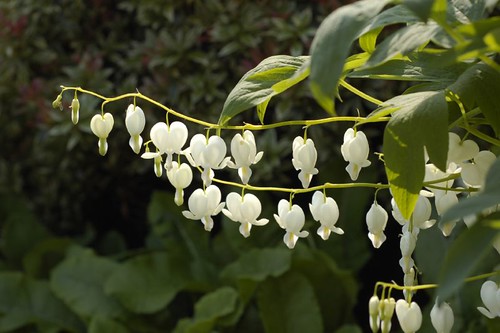
Dicentra are both photogenic and artistic. We often feature them on our Gardeners Tips site as they are rewarding plants to grow.
Plants are widely available for less than £10.

New Dicentra Art for £10

Photographic Prints of Dicentra specabilis Alba from Science Photo Library. Check here for the actual image which differs from the one above which is credited to Facing North East on creative commons BY-NC-SA 2.0

Technical Details of Dicentra Art

A 10×8 Print features an image chosen by Science Photo Library. Estimated image size 254x169mm.
Printed on 254x203mm Fuji Crystal Archive paper for stable image permanence and brilliant colour reproduction with smooth tones, enhanced sharpness, and excellent definition. Size refers to paper used
For any queries  contact Science Photo Library c/o Media Storehouse quoting Media Reference 6281632 © Adrian Thomas/science Photo Library

Something a bit different that might appeal during the long winter nights when gardening gets tough.‘Stitch and Sow’ are a range of Embroidery kits with a packet of seeds to grow alongside the Embroidery you are creating. Indian silk fabrics are provided and the A5 sized flower range includes
Cornflower or Lavender, Geranium (Pelargonium), Lupin or Poppy.
Sunflower (Grow your own Van Gogh), Morning Glory, Foxglove, Dahlia and Hearts-ease.

Artistic Garden Hangings

Posted: August 17th, 2010 | Author: | Filed under: Art, Uncategorized | No Comments »
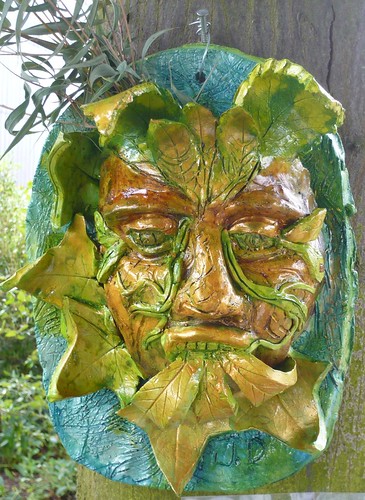
Trees are a great places to locate art in your garden. RHS Hyde Hall has a series of these woodland nymphs in various strategic locations around the garden. I hang all sorts from branches including old cycling equipment and sundry glass pieces.

An explanation of each wood nymph is provided alongside the sculpture. Both enhance the experience of walking through the woodland glade and do not detract from the natural beauty of the trees.
 

Extra Gardening Storage

Extra Gardening Storage

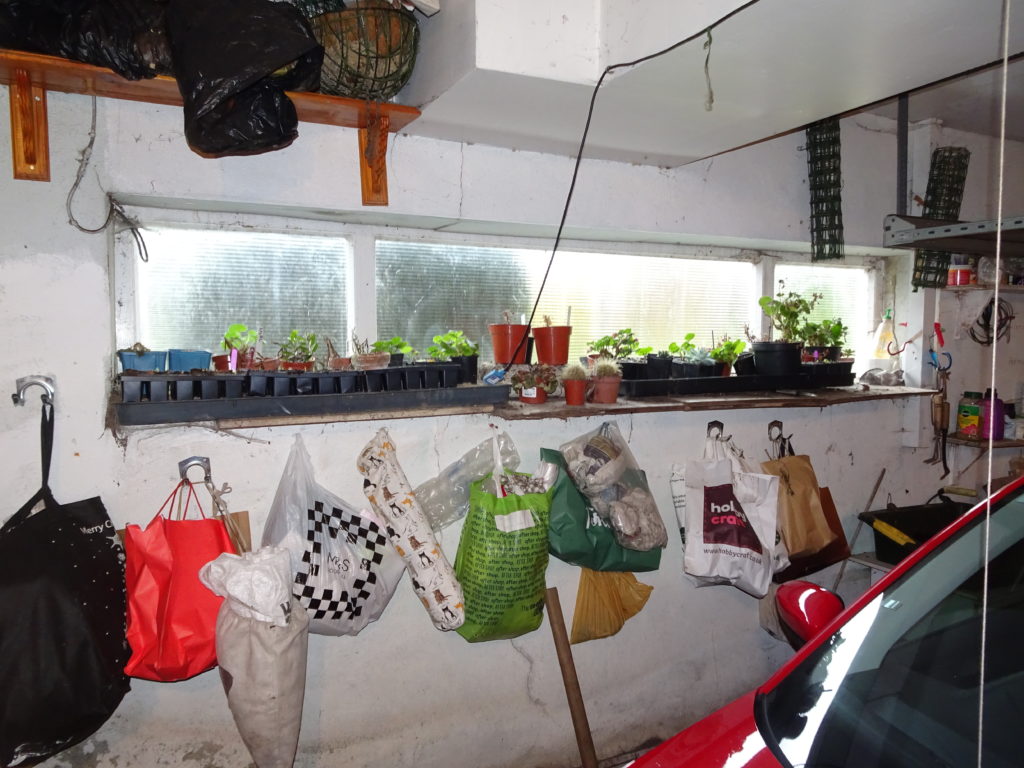
Where do you keep all your gardening needs if you don’t have a special shed. Mine is spread over the garage with seedlings being raised on the window ledge in a variety of containers.

Nailed to the wall

  • Double U hooks support several bags. The cloth bag holds bulbs or plant material awaiting planting. Other bags are bags of bags including plastic bags,  bubble wrap, cloths, fabric pieces, string and a bag for recyclable specials.
  • Above the window is a home made shelf for bits not in use like hanging baskets mesh supports and general gibb.
  • On the right is a shelf for dry goods, fertiliser, and sundry potions and  …icides.
  • G hooks are fixed to wooden battens and hold tools
  • The white line on the left hangs from the roof and is a device to warn me when the car is far enough into the garage. The black line half way across the window is a power cable between the heated sand bed and the other wall and the plugs.

Quick Ideas in the Greenhouse.

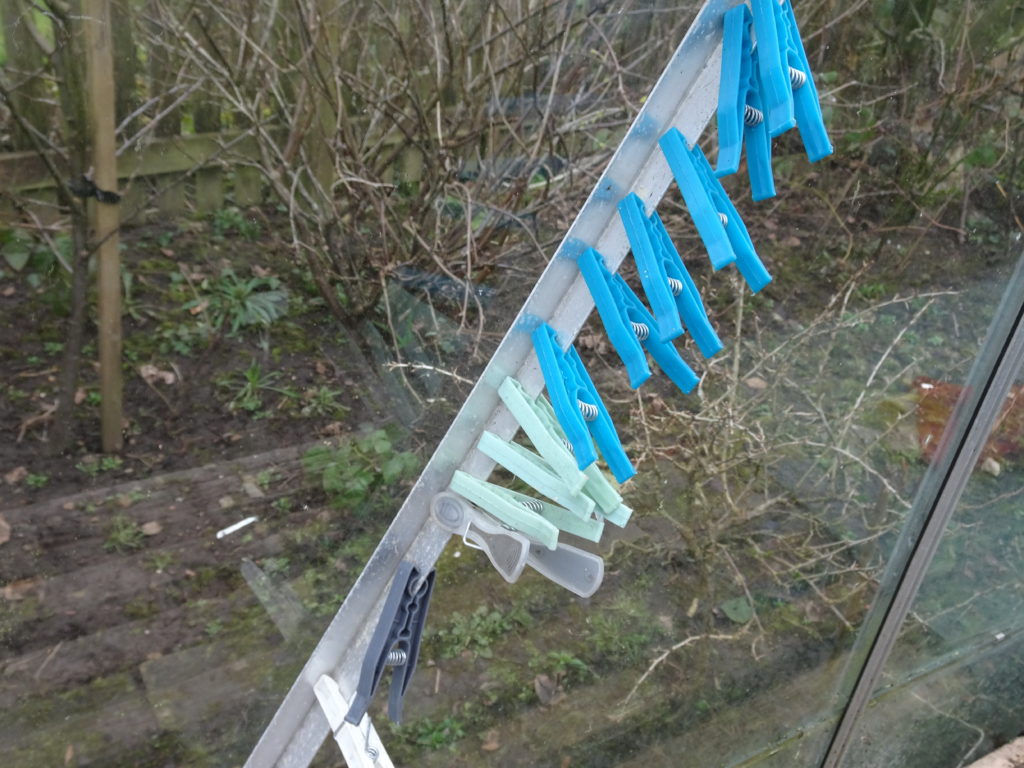
  • I have a stock of pegs on one of the aluminium supporting struts. They are thus ready to hand and can be used as temporary fixing devices. You don’t know what you will want until you want it.
  • I also have support wires strung across the length of the greenhouse which helps support tomato plants.
  • Under the staging I have a tub formerly containing growmore for greenhouse bits, support clips and odd pieces.

Being Rooted and Rooting for the Planet

Being Rooted and Rooting for the Planet

My roots are in the north of England but I enjoy an occasional trip down to ‘the smoke’ as London used to be called. Fortunately there is far less smoke than 50+ years ago but the same can’t be said for air pollution nor particulates around major roads. We walked from Kings Cross along Euston Road to the Wellcome Collection and the ‘rooted beings’ exhibition. Breathing in the fumes caused some coughing and spluttering on the way so subsequently we walked through back streets seeing another side of London. Whilst the air was not as fresh as Ilkley Moor it was OK particularly when we stopped in Russel Square garden.

About Rooted Being Exhibition Free until 29th August 2022

  • ‘Plants sustain life on earth. They are sensitive, complex and interconnected beings, playing surprisingly active roles in ecosystems and human societies’  wellcomecollection.org/exhibitions
  • ‘The exhibition reimagines our relationship with plants and fungi, exploring what we can learn from plant behaviour and how we can rethink the significance of plants beyond simply resources for human consumption. The curatorial team have brought together works from the Wellcome Collection’s archive of botanical illustrations with artists’ commissions to form an open-ended narrative about vegetal life in the context of the climate crisis, from the perspective of environmental and social justice’. Anna Souter
  • In addition to the Wellcome Trusts usual medical information the  contemporary ‘rooted’ project in the main gallery includes art work,  botanical illustrations, a fifth century Papyrus and a 19th-century study of fungi.
  • Mandrake, Brugsmania and hallucinogenic plants are covered in a free brochure about the work of Patricia Dominguez
  • Two of my favourite exhibits included a large wrack sculpture and lobster pots filled with construction and plastic waste.
  • Not a massive exhibition but  the subject is dwarfed by hidden meanings notably a holistic view about plants and the consequences of human interaction with the natural world.


Gardeners Visit to London 2022

Gardeners Visit to London 2022

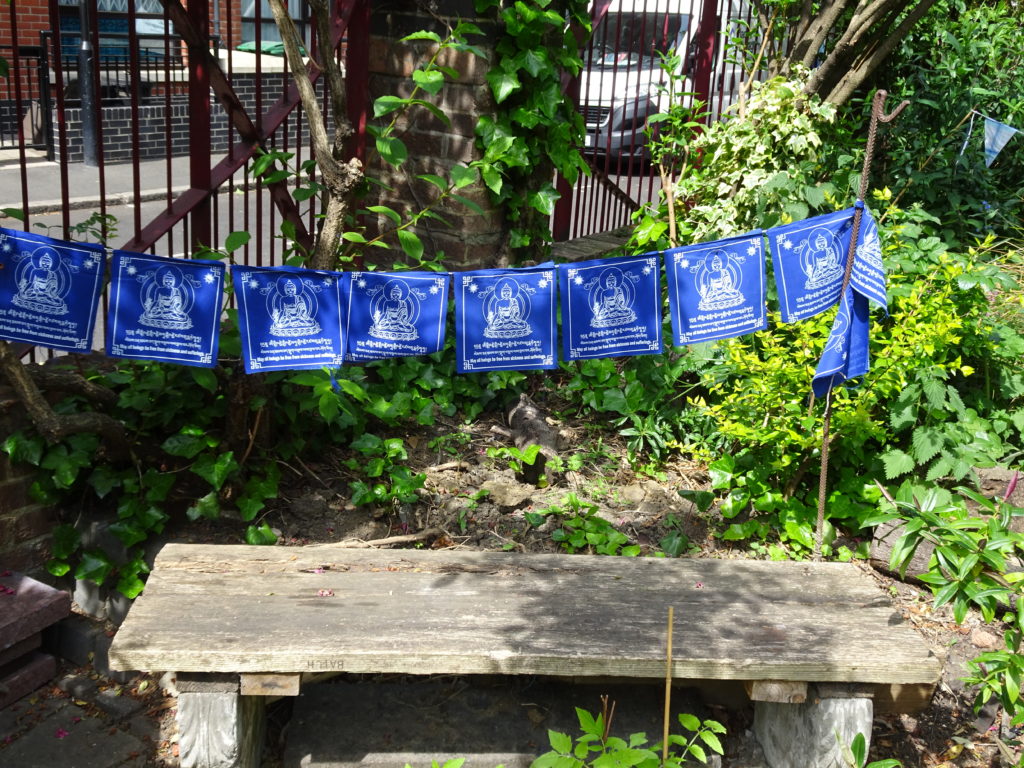
Not what you would expect for a garden called ‘The Phoenix Garden’  in the middle of  Tottenham Court Road near Crown Point. It isn’t a phoenix from the ashes of a great fire or a WW11 bomb site at but was built on a disused car park in the 1980s. It may be part of an overflowing burial ground for St Giles-in-the-field church back in the 1600s and is reputed to be the last surviving Covent ‘Garden’. The entrance is located in St Giles Passage

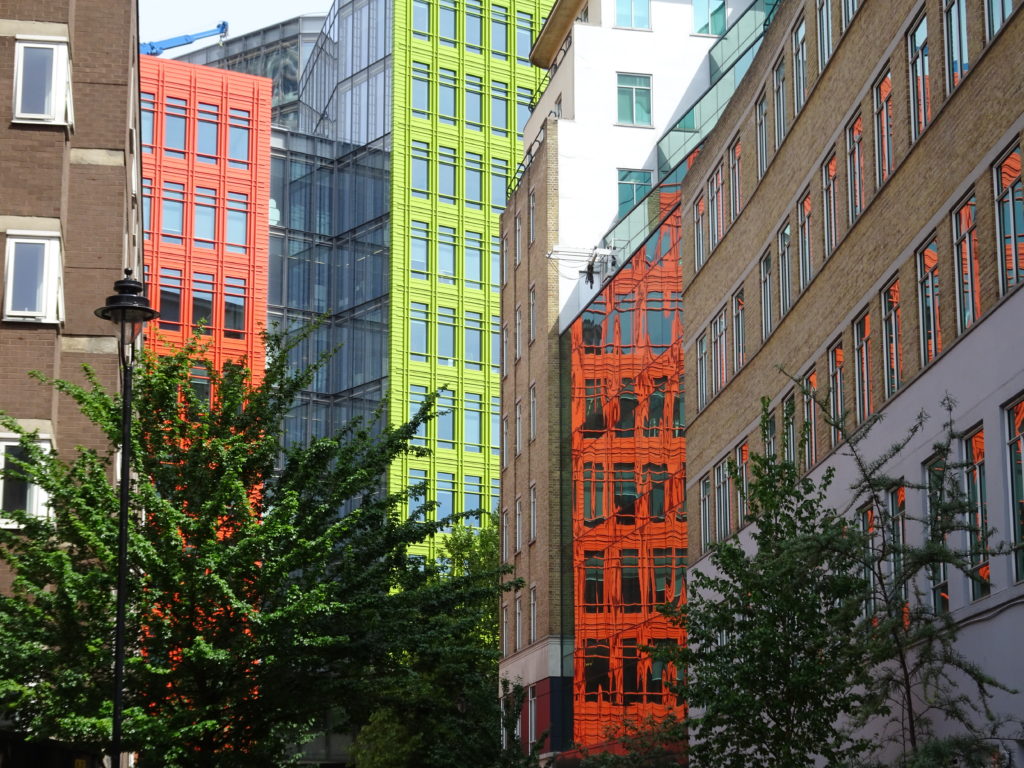
Despite being surprisingly close to the busiest part of central London there is a peace and tranquillity about the small but well formed, free to visit garden. It is maintained to a high standard by volunteers with lots of flowering plants and secluded seating. I was walking or ambling from Kings Cross to Westminster and unexpectedly came across the garden where I spent a tranquil time in a well stocked, well planned space. The large number of insects and wild life is a tribute to the planning and care that has gone into maintaining this community asset. The surrounding buildings do not intrude on the space but the photo below shows the competition from concrete.

Not Making Gardens Anymore

Not Making Gardens Anymore

It is a sad fact that the British hobby of garden-making is in decline. That is partially due to social changes and more importantly there being no new land for gardens.

Scarce Resource

  • Land is a scarce resource and what the suitable land is required for a multiplicity of other uses.
  • Concrete jungles are preventing the sensible development of gardens other than for displaying onroof top gardens, patios or other man made efforts.
  • The Dutch have developed plant growing to a fine art utilising land reclamation whilst our East Coast is eroded and some gardens fall into the North Sea.

Social Expectation and Change

  • Our UK population continues to grow, even though there is a blossoming interest in ecology and the environment, such growth is not noticeably translating into new gardens.
  • There are fewer new parks and gardens in public ownership (unless you count skate parks and playgrounds). At least not in proportion to population growth.
  • Living accommodation has changed in several ways with many more retirement villages, apartments and single occupation homes. Land  is being converted in to a concrete jungle that will not return to a garden opportunity for many life times.
  • There are many competing activities to distract potential garden aspirationalists. Whilst RHS membership may be growing that may reflect the hobby of observing not gardening.
Destroying Gardens

Destroying Gardens

New drives, block paving and concreting over may and I emphasise may seem a good investment but think of the gardens destroyed and the habitats lost under hard landscape.

Some ‘Reasons’ Gardens are Destroyed

  • Housing extensions, extra garages and granny flats can consume land fit for gardens but who cares when  a green resource is lost and  drainage becomes a problem.
  • New housing in green fields, with high density just like the density of the planners who approve the development in the first place. Add in the infrastructure (if any) such as facilities, roads and access leads to more wet misery.
  • One off builds or converting a house with a  large garden into two or more dwellings (often with capital gains tax protection). An admittedly large house near me has built in the front and the back garden now is managing to squeeze in two more detached houses. Five on to one has gone and so has the garden!
  • The advent of E-motor vehicles has led to charging points on house walls and thus more hard standing for more large cars.
  • Decking patios and trendy designer features have the ability to send water and money needlessly down the drain. Save our gardens.