Browsed by
Author: hortoris

Brambles or Blackberries Is it Just a Name

Brambles or Blackberries Is it Just a Name

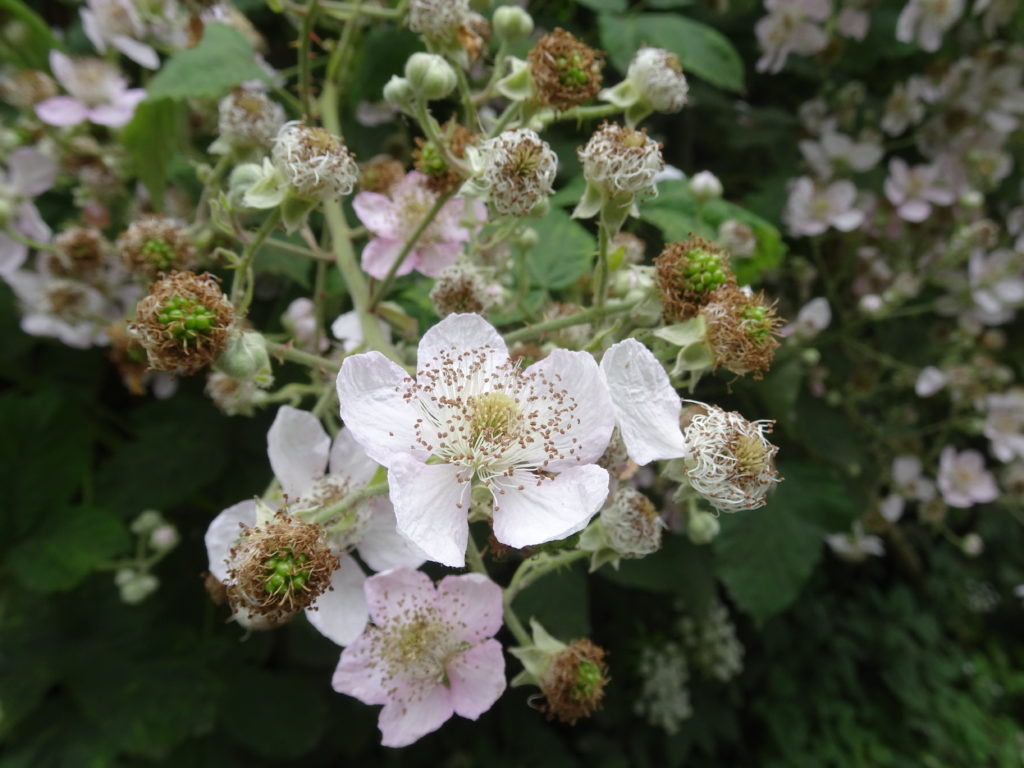
It is not a question of which name but Brambles and Blackberries should be thought of together as one is the fruit of the other.Looking carefully at this picture you can see young unopened buds at the top center with some flowers that have been pollinated and begun to show nascent green fruitlets which will turn into blackberries when they swell and ripen.

As with many fruit there is much in the breeding and plant selection and I recommend checking the availability of various selections 

Wild Brambles

  • Hedgerows and uncultivated land can become home to robust plants. They are often treated as weeds as for gardeners they have invasive tendencies.
  • Long stems or branches often overflow on to paths and the thorns or spines can catch the unwary.
  • Plants growing in sunshine can provide a large crop of fruit
  • Bramble jelly used to be made from wild collected blackberries.
  • In my opinion they make a good flavoursome crumble or mix well with apples in a fruit tart.
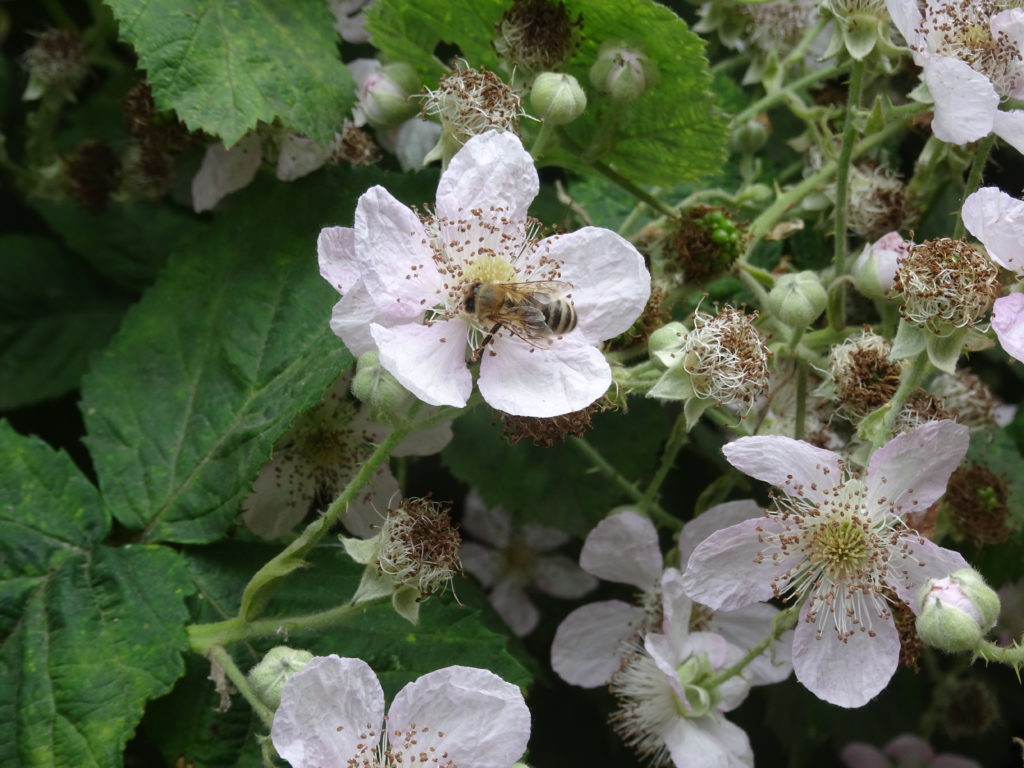
  • Flowers attract a range of bees and wasps which is essential for pollination.

What use are Daylilies?

What use are Daylilies?

Hemerocallis also called Daylilies

These are a popular perennial that can grow to 2 – 4 foot depending on variety and location. It dies back in winter only to regenerate with fresh green strappy, arching leaves in spring. The plant forms good clumps which can be split when they get too large.

Daylilies have a profusion of short lived flowers sometimes only lasting a day as the name implies. So many flowers are produced that there is a continual supply and each blossom bear close inspection as well as offering a good all round display. They normally flower from June to August.

  • Daylilies have given a wonderful show this year!
    Hemorocallis is a plant to look out for and to add to your collection.
  • For those who want a colourful display with lush foliage I can recommend Daylilies

Special uses of Daylilies

    • Plant them close to daffodils to help hide the dying foliage.
    • The plants like water so it is possible to use them by streams or in a bog garden using varieties such as Hemerocallis aurantiaca, (orange) Hemerocallis citrina and Hemerocallis minor a dwarf yellow plant with scented flowers.
    • The flowers are edible and can be added to salads or dried for use in soups
    • The latest new introductions will be more expensive when new but if successful will be available more cheaply in seasons to come
    • I grow Hyperion a yellow flower and want to try some bi-coloured plants like Franz Hals or Flore Pleno

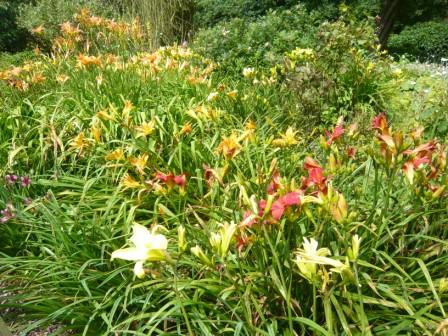
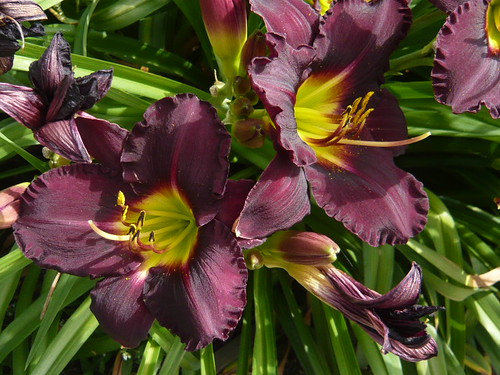
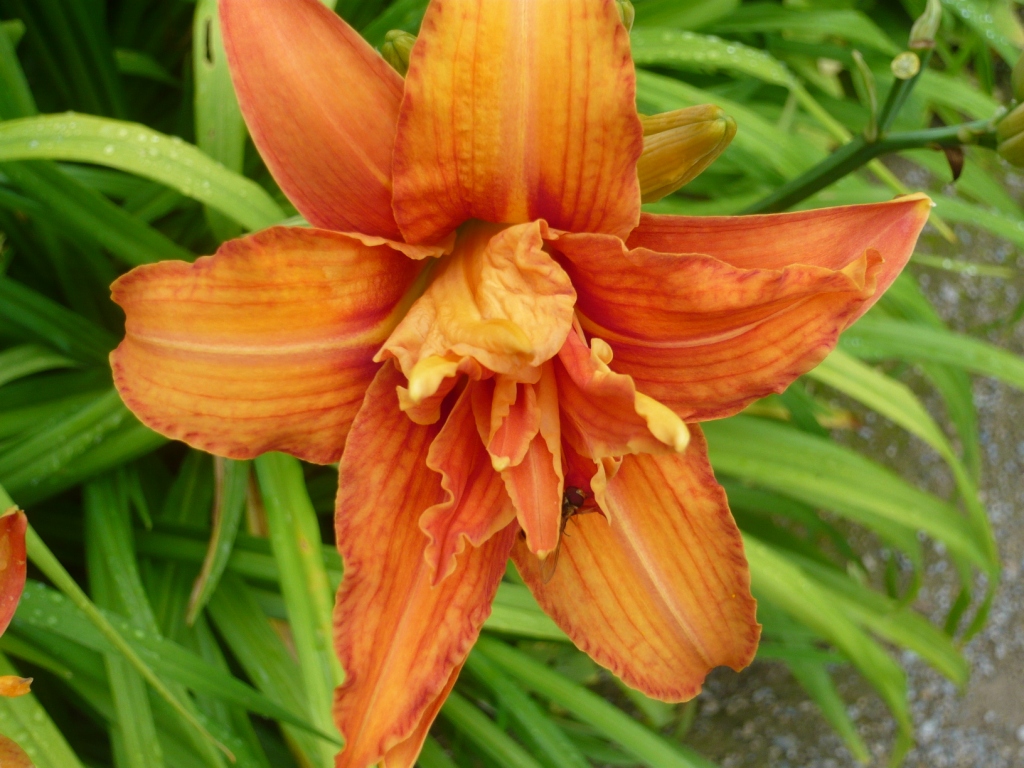
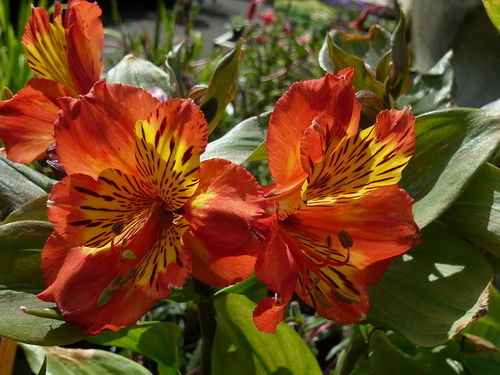
Several varieties are shown here but many more can be seen on Google.

Daylily Tips

    • Available in many shades of yellow, gold, orange,red and bronze – try some from your trusted local garden centre.
    • Size of plant varies but choose your plant by the flower, its scent and how it is held above the foliage.
    • The plastic coloured identification label may not be true on some cheap plants.
    • It is OK to buy plants in flower as long as you give them plenty of water when planting and in early growth.
    • Propagation by division is easy and the success rate quite high but I don’t make each division too small.
    • Find out more at the Hemerocallis society

Poppy Parade

Poppy Parade

poppy

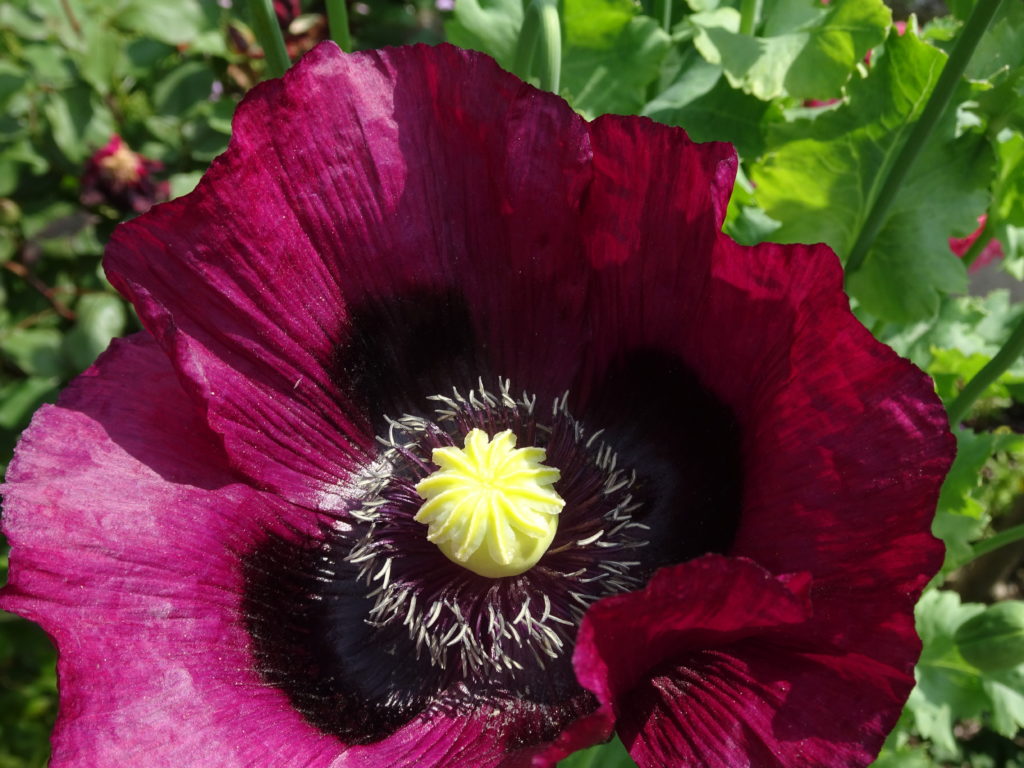
Poppies are easy to grow, sometimes too easy  because they self sow all over my garden and despite the delicate petals I thought of them as weeds. So much so that I forgot to photograph any earlier this year but now have captured some pictures of perfectly purple poppies.

These poppies were grown from scattered seed and plants are 4 feet tall and are producing lots of single flowers. If they are in the wrong place they are easy to pull straight out of the ground. The roots can be a foot long and carrot shaped but help to anchor the plant.

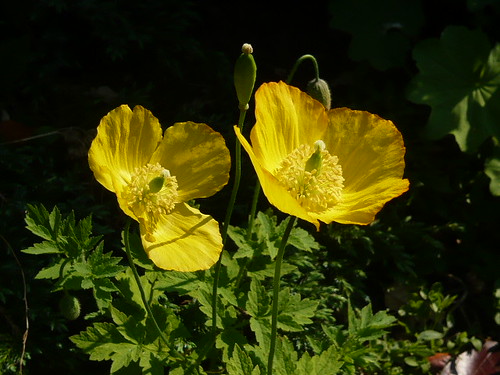
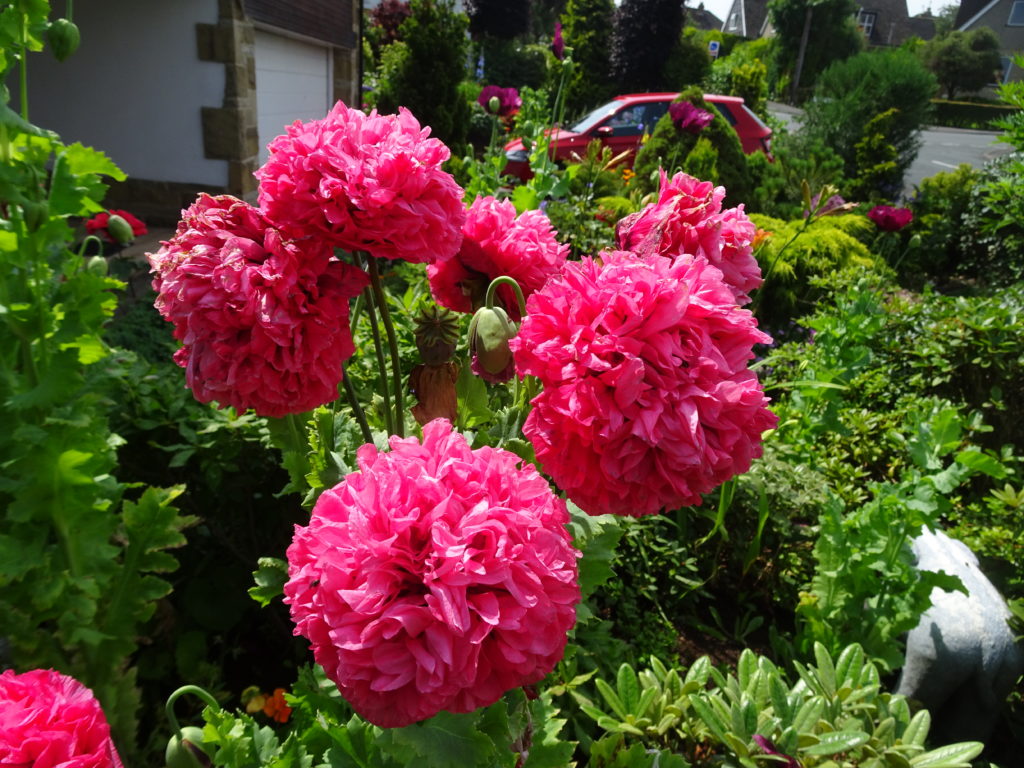
This is another poppy that is flowering well in my garden at the moment. I like the double flower for the lush petals but they are less use to bees and other insects.

Read More Read More

Insect Heaven for Your Garden

Insect Heaven for Your Garden

Virtually no flies on your car windscreen, sterile fields with no hedgerows and a multi-million pound insecticide industry not much heaven for insects. The hope for bugs, flies and little creatures may rest in your garden.

We hear about the need to protect bees due to there essential role in pollination. The contribution plus the complexity and interdependence of all creatures is not fully understood. We should all take care not to cause damage with our ecological footprint.

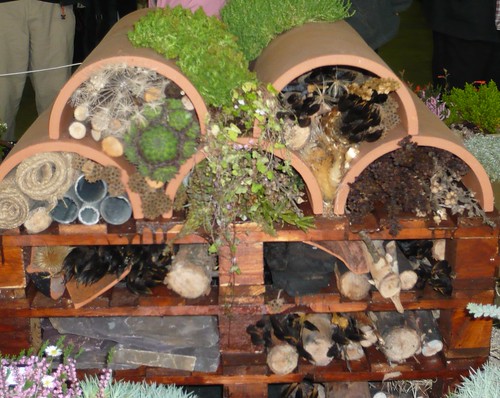
Insect house

Options For Helping Nature

  • Gardens need insects and bugs so why not treat them to a snug insect house.
  • You can build a multipurpose house from wood, stones and old pipes similar to the one above. Fill gaps with twigs, straw and rotting wood which will provide some food. The insects will make a home in the cracks and crevices that provide winter shelter.
  • A pile of old logs in a quite part of the garden can provide a haven for fungus and beetles.
  • Try growing butterfly friendly nettles and other plants that can act as breeding grounds.
  • Do not be too keen to clean and tidy up – tolerate a bit of leaf litter.
  • The charity Buglife has a guide that shows which plants help which insects and how to grow a mini meadow.
  • Insects around the world are facing an apocalypse as a result of toxins we humans put into the environmentso think about the effect you are going to have and spare a thought for bugs.

Book CoverBee nesting boxes will cater for bees and ladybirds.
Place on a south facing wall for optimum sunlight to help bees and for ladybirds place the nester in a sheltered area near tree branches and vegetation such as nettles.

Lions or Griffins Sculpted in your Garden

Lions or Griffins Sculpted in your Garden

high trees 131

I saw this lion at our local garden centre. He was guarding the entrance and looked the ferocious part. But there aere more interesting sculpture displays this summer 2019 in some bigger garden spaces. The Yorkshire sculpture park has a Damien Hirst outdoor sculpture at their current exhibition and Kew Garden is featuring Dale Cilhuli glass sculptures. Newby Hall in North Yorkshire has contemporary sculpture which showcases the best of British in a woodland setting.

Stone Sculpture Pros and Cons

  • Natural stone looks good in the right place. It creates a better effect when local stone is used
  • Stone looks good in the right place. It creates a better effect when local stone is used. Aim to achieve a material that is sympathetic to the area.
  • Reconstituted stone looks good in the show room and for several seasons. For some reason it weathers more rapidly or looks less crisp a couple of winters later.
  • Good stone that has been well carved can be very expensive
  • Stone is heavy and not easy to move around or steal.
  • Sculptures without natural sunlight get more moss and lichen than well lit well located sculptures.
  • Good sculpture can provide both a talking point and a feature or focal point in your garden design.

Sculpture Comments

  • Large scale sculptures work best in larger gardens. It is worth balancing scale as too small a sculpture can get lost from view.
  • White or light stone sculptures should be set against a dark background
  • Small sculptures can be mounted on a plinth for greater effect.
  • Sculptures work well in pairs. Natural items work best in odd numbers
  • Old and valuable stone items should be insured, bolted down or alarmed. Thieves will steal anything!
  • A resin and composite stone sculpture like that below will cost significantly less than a stone sculpture.
  • Cheaper sculptures tend to lose the sharpness of carving or molding.

Gargoyle

Animal Life in the Garden

Animal Life in the Garden

Some  animals can be a real pest in the garden. Their crimes include eating the wrong thing, digging in the wrong area, turning grass brown with urine and leaving a dirty mess. Some chose your favourite plants to damage as I know from some aggressive over fed pigeons in my own garden.
In my experience the worst offenders are rabbits, cats, mice, deer, pigeons and dogs including foxes. Rats cause concern but have not caused direct damage in my garden.

Animal Deterrents

  • Cats and dogs scrape and dig often in the friable soil where you have planted precious seedlings. They can be frightened off with a sonic sound device like the one above.
  • Scent can scare off many animals. Old wives tales of lion or elephant dung may be far fetched but Retnardine sprayed on seems to work. A crushed garlic in water spary has some short term effects.
  • Rabbits and deer can be fenced out of your garden with special mesh, wire or high fences. That way the pesky blighters will go elsewhere for breakfast. Fences and hedges don’t seem to work against determined cats who always appear to prefer your garden to their own.
  • Birds are scared off brassica crops by special scarers, scarecrows or more effectively by netting and string.
  • Mice have eaten lots of my bulbs this year and when I plant new ones I will put a mesh over them before the soil is replaced as protection.
  • Rats I have poisoned as they bred around my compost heap and I had health concerns.
  • Slugs are  a whole new ball game

Sonic Repeller

I was asked about dog problems by a member of our local crown green bowling club. Apart from sonic repellers of electric fences the only answer would be a 24 hour patrol!

Animal repellers from Amazon
Book Cover

Garden Theft and Special Garden Insurance

Garden Theft and Special Garden Insurance

Is your garden safe from petty crime? Unfortunately in recent years garden theft has been on the rise. Plants, furniture, metal objects and statues can all be  attractive to thieves. Our local police  circulated this timely reminder on how to ‘nip crime in the bud’.

‘…Another emerging trend is for garden tools and rubble left lying about in
the garden to be used to smash windows to gain entry into properties. Now
the weather is becoming milder people are starting to venture back into
their gardens to tidy up, but seem to be leaving their tools lying around,
which make ideal implements for a would be burglar. Please remember to
secure all tools when you have finished gardening, and to tidy away bricks
and rubble if at all possible.’
Plant Pot Worth Pinching?

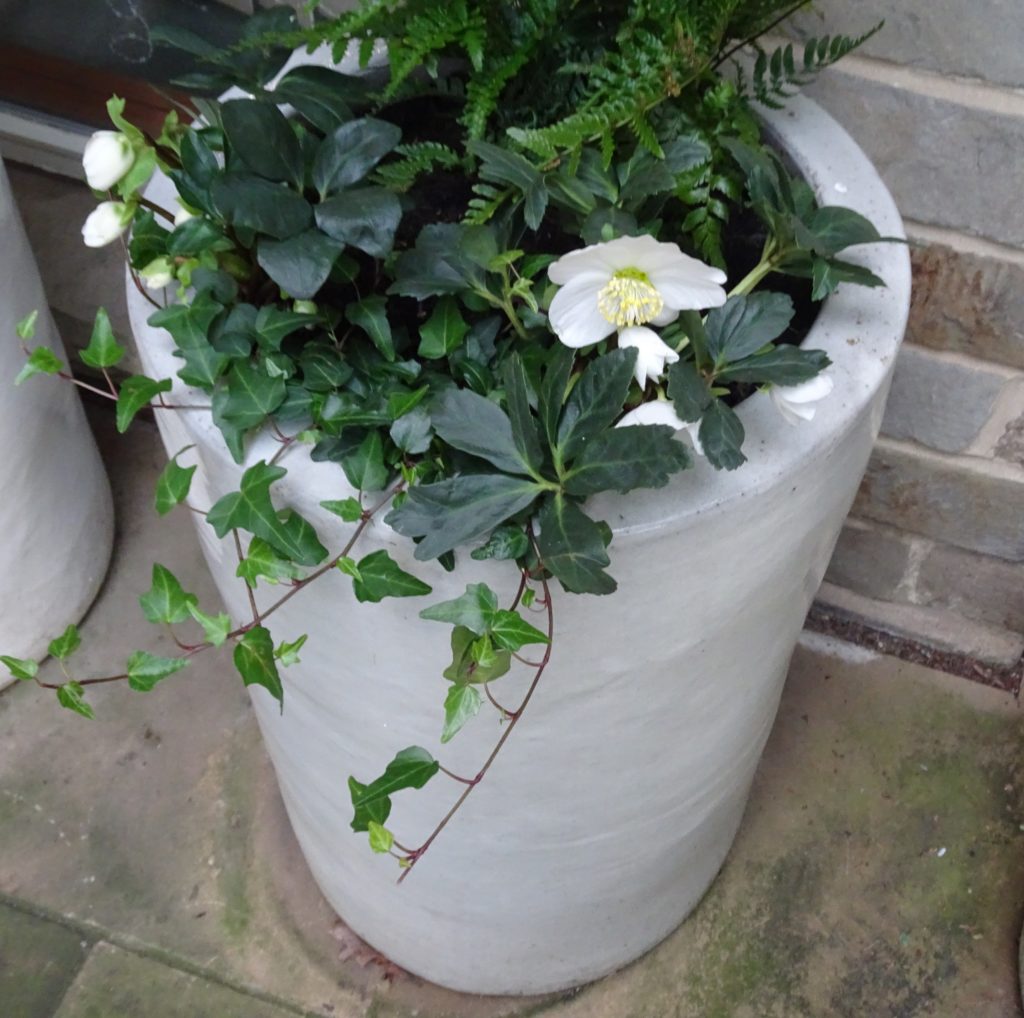
Another reminder when you are in the garden shut and lock doors and windows. You can be surprised how crafty and cunning some ‘nere-do-wells’ and ‘have it away day’ thieves can be. Even with care you may still be susceptible to burglars. We had our non europrofile locks broken in less than a minute, the barrels were thrown into a large shrub where we recovered them and finger prints but not the items stolen from our bedroom.

Garden Insurance

Here are some tips on what to insure and how you could be covered

  • Theft of trees,  plant pots, containers and specific plants that are within the boundaries of the home.
  • Statues, semi- permanent features and structures such as arches and arbors.
  • Loss or damage to fences, gates, hedges, lawns, patios, ponds, rockeries and walls caused by storms, floods, fire, malicious or accidental damage.
  • Loss or damage to fish or animals is unlikely to be included in garden cover.
  • Consider the total value of the items to be insured. Do not underestimate the value when setting up a policy.

Other Policies

  • Your household contents insurance may cover garden furniture as well as the contents of your shed and garage but not on all policies.
  • Your household buildings cover should include outbuildings  if they suffer damage caused by falling trees, storm or flood but again you need to check.
  • You should have public liability insurance under an existing policy but it is worth checking particularly if you open your garden to visitors.
  • If you work as a jobbing gardener you need business cover. You may also want special accident cover against personal injury.
  • Talk to an expert of broker.

Read More Read More

Gardening for Those Getting On in Years

Gardening for Those Getting On in Years

Expert gardeners may have spent more than half a century developing their skills but you are never to old to start, nor are you too old to learn easier and simpler ways to enjoy your gardening.
Bending and kneeling may get a bit harder as you age but there are ways to overcome mobility restrictions like padded kneelers with good handles.

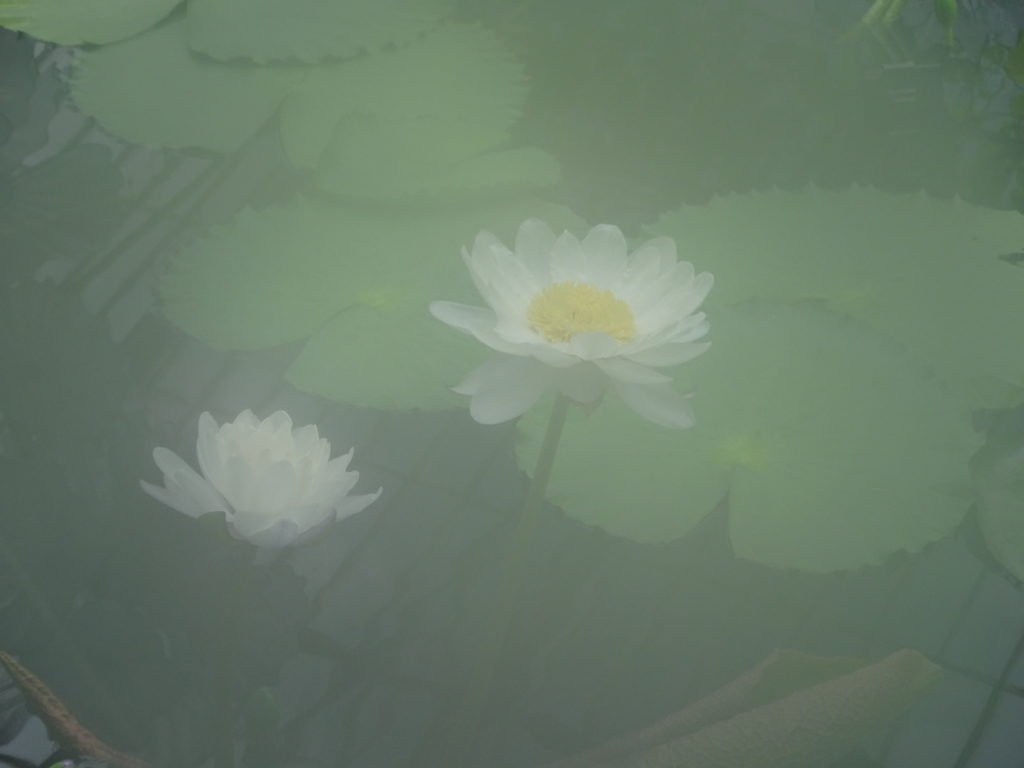
Waterlilies Viewed through my cataracts?

Tools as You Age

  • You are not going to double dig acres of ground so get a spade to suit. A small stainless steel blade lifts less but will not over tax the muscles and still get most jobs done at a steady pace. Mud wont get claggy and stick the blade so you only lift it once.
  • I have very useful smaller forks and a trowel on long handles. They are easy to obtain and save your back. You can also fashion your own dibbers and gadgets
  • A two wheeled barrow is lighter for pushing than a traditional one wheeler.
  • Use large pots and containers to reduce watering and put them on casters for moving around or better still leave them in a permanent spot.

Book Cover
The Illustrated Practical Guide to Gardening for Seniors: How to Maintain Your Outside Space with Ease Into Retirement and Beyond by Patty Cassidy from Amazon

Easier Gardening as You Age

  • This above book shows how easy it is for seniors to carry on gardening, into and way beyond retirement.
  • It looks at different kinds of homes and the gardens they provide, assessing the location, local climate and soil type and evaluating problems such as arthritis and loss of balance.
  • The book also outlines the importance of taking care of your body, summarizing the safety issues, what to wear, warm-up exercises and equipment to make the garden easy to access for unsteady feet or wheelchairs.
  • Included is a directory that profiles the many planting choices available, each with a difficulty rating and a hardiness category.
  • Gardening for Seniors is packed with projects, garden plans and step-by-step sequences.
  • Easier gardening will appeal to active gardeners in their early retirement through to those with more limited abilities, showing how, by adapting garden activities and the tools employed, the joy of gardening will remain undiminished.

Plants and Planting as You Age

  • Avoid fast growing shrubs that need pruning and regular spraying. I prefer small rhododendrons to roses for this reason.
  • Aim at your senses by placing plants where you will get the most reaction from those you still have in full working order.
  • Design and implement your gardening to impress others and they will stop and talk.
  • Cajole a relative or pay someone to do the heavy yards (landscaping, tree lopping, hedge trimming or whatever you struggle with).
  • If all is failing grow indoor plants even resort to cacti
Pettinger’s Pelargoniums

Pettinger’s Pelargoniums

Sorry this is not a new geranium nursery or supply business although I wish it was. It is  just a follow up and continuation of my earlier promise  to keep updating my new found enthusiasm for Pelargoniums.

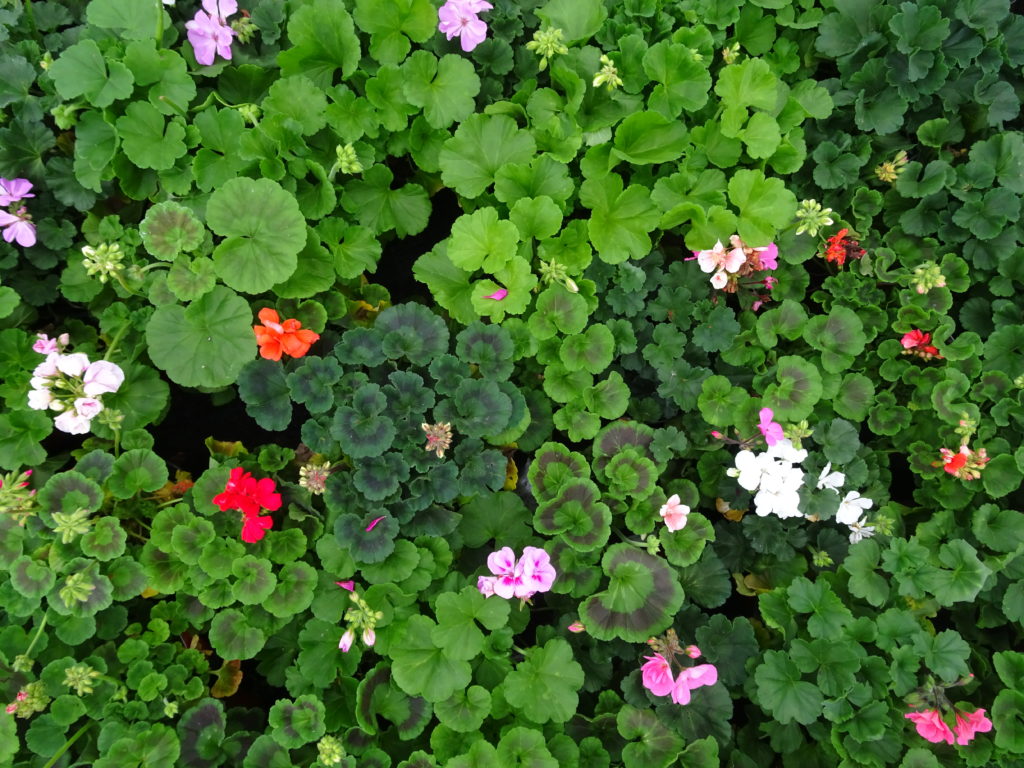
Zonal geraniums from overhead.

This is a garden center photo taken 17th June 2019. The plants were in 4″ pots selling for £2.49. There was nothing to tempt me with this selection on quality, originality or value for money grounds.

From the ridiculous to the sublime I went to visit a more upmarket garden location in South London.

Geranium Update and Kew

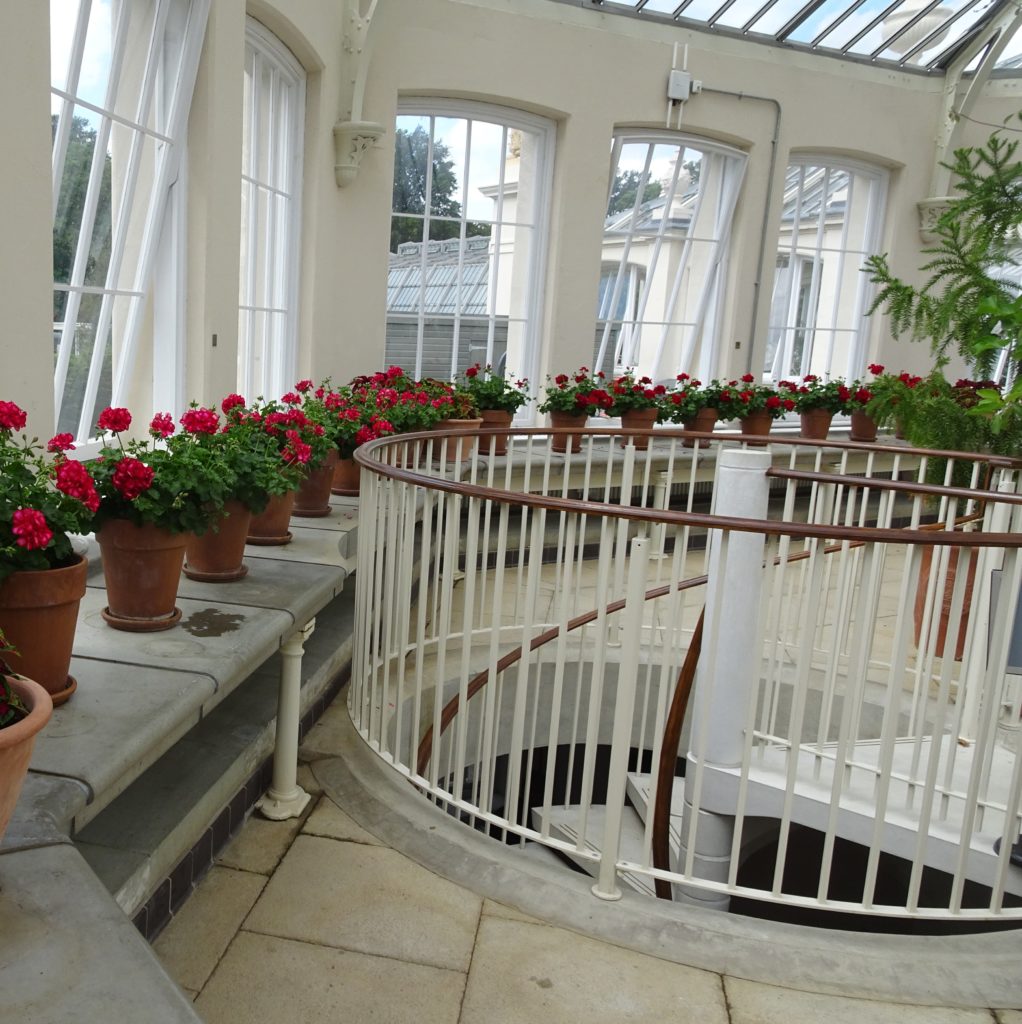
  1. A trip last week to Kew garden chimed well with my recent pelargonium theme with a good display of many species. In the grounds they avoided the brash colour schemes of the familiar bedding plant varieties and had the best mixture of species in the Princess of Wales Conservatory.
  2. I was impressed with the greenhouse display of 8″ pots of several specific varieties including ivy leaved types.
  3. As an aside comment I arrived at Kew to queue in the June rain (what else). Next time I will book a ticket via the internet to gain rapid access. Due to the rain I bought a ride on the Kew train that provided a 45 minute guided tour of whole site. A worthwhile investment for the guides know-how and the ability to jump off and on during the day.
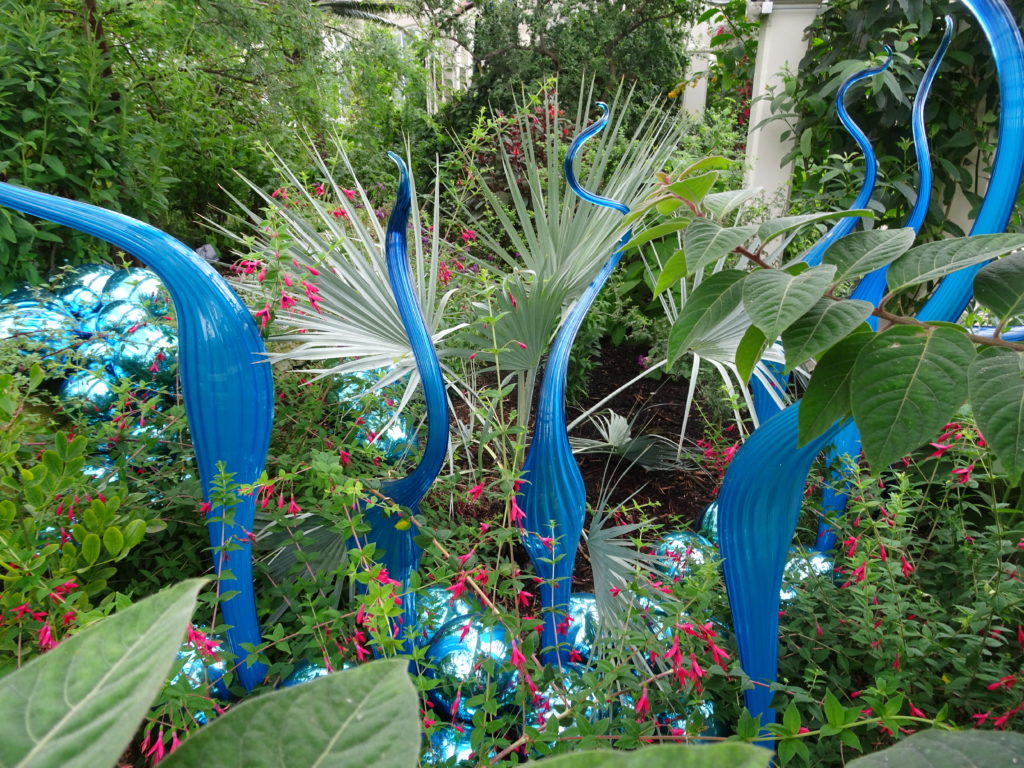
  4. Currently there is a Dale Chihuly  exhibit of luminous glass artworks set in Kew’s spectacular landscape and greenhouses.


London Mews and Georgian Terraces had some good flowering displays on substantial plants. They probably survive our winters due to shelter from the nearby buildings. As is my wont I failed to get the best ones photoed.

Geranium Time and Time Again

Geranium Time and Time Again

Yes it is well past time to look at geraniums again. Since this blog started there have been over 60 pages of tips about geraniums. The most popular have been about scented,  regal and dwarf geraniums but zonals and bedding also retain much interest. (You can find these and more links by using our search button).

Pelargonium Vancouver Centennial’ @ Kew Garden

Why then is there this new post about geraniums? Well it is a reflection of my personal taste and intentions as I relaunch my horticultural interest in the 200 or so pelargonium species that we all call geraniums. (There are a further 400+ loosely related species correctly classed as geraniums often called hardy geraniums. Are you with me so far?) I am going to call pelargoniums by the common name of geraniums to the annoyance of some in the Pelargonium and Geraniums society.

Geraniums Again From a Personal point of View

  1. This post is intended to force me to follow up my good intentions to grow more and better geraniums.
  2. My first early horticultural memory is of pot plants grown on windowsills by my mother 60 years ago. The colour and unique musty scent of the leaves lingers somewhere in my brain. I do not remember the pink variety but it seemed vaguely dutch and royal and it certainly ‘was a good dooer’.
  3. Traditionally I garden by numbers and go for volume, the more the merrier (and usually the more cramped).
  4. An aspiration here is to grow fewer, show quality plants.
  5. Again I also want some house plants to give away as I think they make nice gifts and are easyish for the novice to cultivate and enjoy.
  6. My record keeping has been spasmodic over the years so it needs more attention.
  7. So may be  the start of a series of pages noting how I get on or at least a way of keeping my nose to the ground.

Princess of Wales Conservatory Kew Garden June 2019