Winter Interest
Growing Corkscrew Hazel for Flower Arrangements
- Corylus avellana Contorta is also known as Harry Lauders Walking Sticks or Corkscrew Hazel
- It is a slow growing deciduous shrub that can grow to 20′ wide and 25′ high when mature.
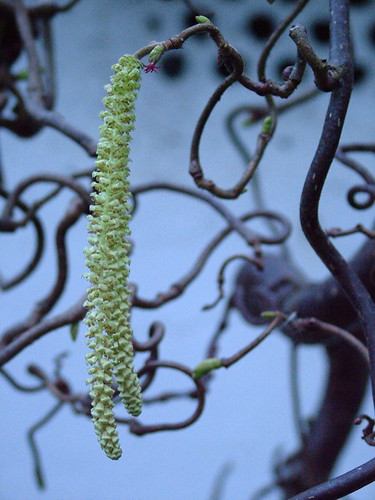
- Corkscrew Hazel looks best in winter and from February-March there are pendant male catkins on the bare branches.
- Propagation is best done by layering branches.
- When in leaf the mid green leaves give an ugly deformed appearance.
Special Tips for Flower Arranging with Corkscrew Hazel
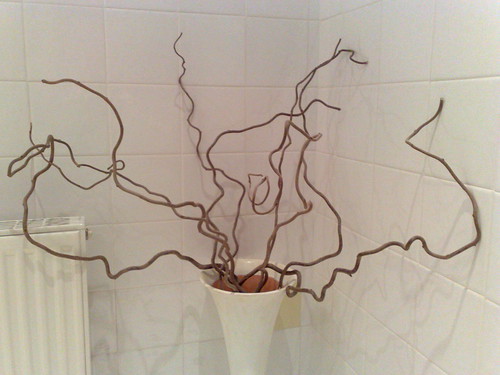
- Use the twisted stems and bare twigs in winter arranging.
- Twigs in bridal bouquets can add movement and interest.
- Corkscrew Hazel are popular as a base for Ikebana
- Catkins will gradually lengthen and become more yellow when kept in water for several weeks.
- Twigs can be dried and used year after year. They can also be painted for Christmas.
A full array of books on Flower Arranging and related subjects is available from Amazon. You will find more advice and artistic inspiration amongst this selection.
Special Tips for Flower Arranging with Contorted Willow
- I have included Contorted Willow with Corkscrew Hazel as the issues, effects, tips and methods are quite similar.
- Twigs and stems can be dried and used several times or be sprinkled with glitter for Christmas.
- The cut twigs will last several weeks and eventually the willow leaves will open on the stem.
- Contorted Willow is available under several names including Salix matsudana Tortuosa (Salix babylonica tortuosa), Salix x erythroflexuosa or common names Dragons Claw and Tortured Willow.
- Salix the Willow family are more vigourous than the Corylus Hazels
Credits
Ikebana by M. Martin Vicente CC BY-NC-ND 2.0
Corylus avellana ‘Contorta’ by Stadtkatze CC BY-NC-SA 2.0
Spring by David Davies CC BY-SA 2.0
Contorted Willow by touring_fishman CC BY-NC-SA 2.0
To grow a generic mix of flowers for arrangements and bouquets check out Thompson & Morgan

Ikebana: The Art of Arranging Flowers by Shozo Sato and Kasen Yoshimura
Corkscrew Hazel and Contorted Willow are plants that both produce twigs that add movement and style when flower arranging. Mix with just one type of flower as less is generally more with Hazels and Willows.
Turn your arrangements into botanical works of art – here are some examples and clubs you could join.

Corylus avellana Contorta the Corkscrew Hazel aka Harry Lauder’s Walking Sick first discovered in 1863. Slow growing eventually reaching 20′ high and wide unless pruned for flower arrangements. Autumn cob nuts produced. Hazel catkins in spring. Cut twigs last well in water
- willow leaves will lengthen. Catkins will open and yellow pollen will show
- twigs can be dried by hanging upside down then used year after year.
- twigs can be painted
- use for christmas decorations, bridal bouquets
- mix with flowers cut at different heights
- Contorted Willow  Salix matsudana tortuosa aka S. babylonia var pekinensis, Dragons Claw, Tortured or Corkscrew Willow fast growing hardy deciduous tree
- Salix x eryroflexuosa branches of rich chestnut colour and a ocher -yellow trunk – also hardy