Browsed by
Month: March 2016

Tips for a Minimalist Garden

Tips for a Minimalist Garden

Skulpturenpark Köln / Cologne Sculpture Garden. Hubert Kiecol: "Rheinwein" (Rhine wine) in Sou Fujimoto's "Garden Gallery" from 2011

Dramatic gardens can be designed on minimalist principles. Minimalist gardens need to look good during all seasons and at all times of the day. Thus all your senses plus horticultural nous need to be considered when setting out your initial design.

Essence of Design in a Minimalist Garden

  • Minimalist gardens need to be immaculate.
  • Minimalist options include a formal or romantic look but you must have the clarity of vision and stick too it.
  • There is no room for ragged edges, dirty gravel or scattered chippings.
  • Minimalist gardens may be designed to look cool and welcoming but check that that is also true for the plants. Often cool plants are planted in hot spots
  • Invest in good quality hard landscaping, it is hard to do minimal on the cheap!

Book Cover

Read More Read More

The Pansy Orchid! Miltoniopsis

The Pansy Orchid! Miltoniopsis

Orchid flowers are available in so many different colours and forms.

It struck me that both of these Orchids had the look of Pansy flowers with the whiskery central colouring and petal formation.

Have the Pansy and Orchid genes got mix up somewhere in evolution? Not really but a gardener needs some imagination, to say nothing of perseverance, patience etc.

Miltoniopsis Species and Hybrids

  • After noticing this I discovered that the Pansy Orchids are called Miltonia Orchids.
  • They grow rapidly into specimens if they can enjoy warm conditions.
  • Many hybrids have been bred over the years that are easy to grow and they will flower with the flat Pansy-like face
  • A humid atmosphere is beneficial. Miltonias prefer to have their roots constantly damp, but never soggy .
  • If the leaves have a pink tinge the plant is receiving the maximum amount of light. Red leaves are a sign of too much light and yellow too little.
  •  Miltoniopsis are native to South America
  • The fragrant flowers last about six weeks but do not last as well when cut.
  • Water Miltonias  once a week, more often if the potting mix appears to be drying out.
  • Fertilize with a dilute solution of balanced fertilizer about once every two months while the plants are growing.
Grow Ranunculaceae Buttercup Family From Seed

Grow Ranunculaceae Buttercup Family From Seed

Members of the Buttercup family are called Ranunculaceae. To grow the plants successfully beware the seeds tend to have a short period of viability and need planting straight away.

trollius

Quick Tips for Germinating Perennials

  • Sow the seed when it is fresh. Collect it from the plant as soon as it is viable.
  • These perennials usually germinate the following spring after a period of cold.
  • Sowing them early provides the protection of the soil.
  • If sowing direct into the ground make sure weeds have been eradicated first.
  • Meadow buttercups do not seem to need any help from gardeners

nigella

Ranunculaceae family to grow from Seed

  • Members of this Family usually have 5 coloured sepals instead of petals and divided leaves.
  • They are herbaceous non-woody plants except Clematis.
  • Aconitum seeds and plants are poisonous
  • Anemone
  • Aquilegia seeds at Thompson & Morgan
  • Caltha
  • Clematis, I find them hard to grow from seed.
  • Delphinium seeds at Thompson & Morgan
  • Eranthis
  • Helleborus deadhead after flowering and feed unless you want to collect seed.
  • Nigella easy from self sown seed
  • Ranunculus
  • Trollius top photo

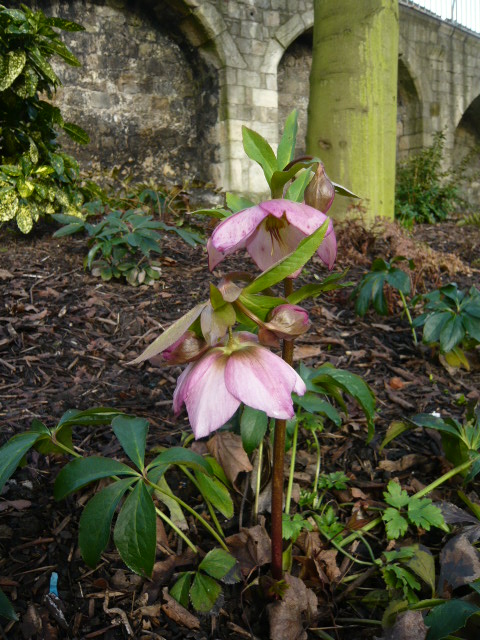
Helebore hybrid

Seed merchant advice (but they want to sell seeds all year around.)
‘Sow April to May or September to October. Alternatively, sow in late summer in 7.5cm (3in) pots in a cool greenhouse and then overwinter plants in cool, well lit conditions.
Sow outdoors where they are to flower.
Prepare the ground well and rake to a fine tilth before sowing. Sow 3mm (1/8in) deep, in rows 30cm (12in) apart.
When large enough to handle, thin out seedlings to 23cm (9in) apart.’

Photo Credits
trollius by withrow CC BY-NC 2.0
nigella by ripplestone garden CC BY-ND 2.0


Free Plants from Layering, Cuttings and Division

Free Plants from Layering, Cuttings and Division

It can be very satisfying to grow more plants for free. There are several ways including layering and cuttings than can help you increase your stock of plants. Then you can give them away, plant them, resell or just use them to protect against losses of your favourites.
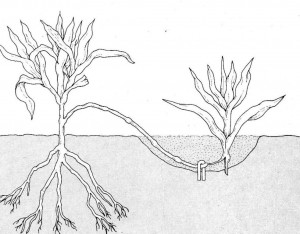
layering basic

Layering

As shown above layering involves little trauma to the parent plant and works particularly well for plants with a single tap root.
A low stem or branch is bent into contact with the soil and pegged down to the soil. I put more soil or a stone over it to keep it down. Encourage the end to poke vertically out of the soil and tie it too a cane if it needs support. Try layering on Rhododendrons or Daphnes but not annuals.
For woody plants it will take some time for new roots to form before the new plant can be cut from the parent. To speed up the process cut the stem half-way through and make a small slit. This will form a tongue where the new roots can start to grow.
You can make your own pins to hold plants down by bending a 6 inch piece of firm wire a couple of inches from the end.
For some plants like violas, primulas and heathers, it is enough to cover the stems from the crown with new compost and in a few months new roots will have formed making pre-rooted cuttings.

Pink Grans Favourite
Pinks and Carnations are popular plants to propagate from layering.
Hardwood Cuttings

Take a long cutting of ripened wood. Trim below a node and remove lower leaves. Remove a one inch long, thin strip of bark at the base of the cutting. Dip in hormone rooting compound and plant two-thirds into soil and firm down. Semi-ripened wood works better for some plants like Ericaceas.
Roses can be increased this way but success is not 100%.
All such cuttings should grow true to the original plant.

Other Cuttings

Young growth 1-3 inches long should be cut from side shoots or stem of the parent plant. Trim below a node (leaf joint) and remove any leaves that will be below soil level. Dip in hormone rooting powder or liquid.
Put several cuttings around the edge of a pot and water the soil from the bottom. A base heater will speed up root growth but any light place out of direct sun will suffice. Cover the pot with a plastic bag or the top of an old pop bottle to retain moisture until new growth is noticed. This method is good for Dahlias, Lupins and Delphiniums amongst other herbaceous plants.
I often just push prunings (of Box and Flowering Currant) back into the soil.
Most of my Pelargoniums are now generations old from numerous cuttings.
Pelargonium

Rosettes

Some plants grow off-shoots or extra rosettes.
These can be potted up and treated like cuttings by putting them in gritty compost to avoid rotting. As with all propagation use clean, sharp tools and fresh materials.

Division and Root Cuttings

Hebaceous plants like Hostas, Phlox, Day Lilies, Campanulas, Michaelmas daisies and Ferns can be increased by division of the root. Take the edge of a clump with some root and replant. Alternatively dig up the plant and chop the root into large pieces discarding any poor material from the center of the plant. Replant the new pieces and you will have new rejuvenated plants next year.

Be on the look out in your garden for suckers that can be grown on to form new plants.
Loganberries and Blackberries may have rooted them selves from the tips of stems that touched the soil.
Self sown seedlings or collected seed is one of the most popular way of acquiring more plants.
Good luck with finding and creating your own Free Plants.

Blazing Deciduous Azaleas

Blazing Deciduous Azaleas

Autumn is the best time to plant Azaleas so you get a blaze of colour next spring. If you want to see the colour before you buy than aim for a pot grown plant in spring.

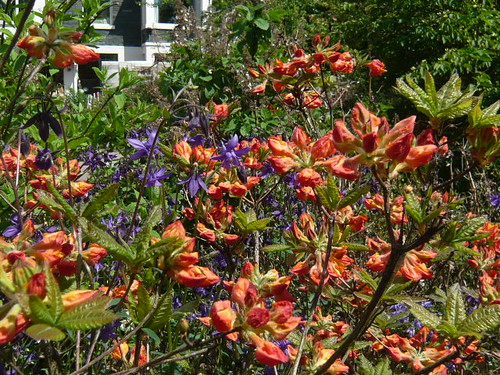
Azalea & Aquilegia

Deciduous Azaleas have trumpet shaped flowers in a range of bright often fiery colours. The flowers appear before or at the same time as the leaves.

Types of Deciduous Azalea

  • The Ghent hybrids are generally fragrant plants growing 4-6′ tall.
  • Knapp Hill hybrids, Exbury and Mollis Azaleas do not have much scent but are available in vivid colours.
  • Occidentale hybrids have fragrant pastle coloured flowers in May.

Read More Read More

Propagate Plants – Help Books

Propagate Plants – Help Books

Your book shelves wont propagate themselves but with just a bit of help from Amazon……

Book Cover

‘RHS Propagating Plants’ a Paperback by Alan Toogood is a good present for a favourite Uncle (I hope my relatives are reading).
The RHS own review says ‘Each plant is described briefly, followed by in depth descriptions of the main forms of propagation which can be used to increase stock, gathering seed, taking cuttings, grafting and so on. Earlier chapters cover basic botany required to understand how plants grow and also describe the various techniques in detail.’ At around £10 I think it represents good value.

Book Cover

‘Creative Propagation’ by Peter Thompson is a scientifically sound book based on a readable approach to the propagation of a range of plants.
At around £15 this book helps the gardener understand the processes that makes propagation work.

Book Cover

Readers Digest and Miranda Smith bring us ‘The Plant Propagator’s Bible’ but with Readers Digest I often feel like I have just had a chinese meal – shortly afterwards I want something of more substantial.

Read More Read More

Garden Fiction on Gardeners and Gardens

Garden Fiction on Gardeners and Gardens

Book Cover

‘The Garden of Reading: An Anthology of Twentieth-century Short Fiction About Gardens and Gardeners’ edited by Michele Slung.

I was going to write about brochures, bulb and seed catalogues, but then I came across this book. At least the anthology collects works that set out to be  fiction, whilst gardening brochures presumably did not.

On Brochures

  • The best photographs you can imagine are used in brochures. So more flowers and better colours are visible than you may attain with your own plants.
  • Printed brochures are subject to the skill and vagaries of the printer and his reproduction processes. Accurate colour matches can’t be guaranteed.
  • Brochure side step, insect damage, weather problems and  other trials and tribulations facing gardeners.
  • It is a brochures  job to put the best foot forward not talk you out of a purchase.
  • So are Brochures fact or fiction – well I will read the Anthology whilst I make up my mind.

On the Anthology

‘….The twenty-four stories in The Garden of Reading comprise a diverse and unexpected collection but one that stays true to its central and harmonious theme. Included are Colette’s sensuous ‘Grape Harvest,’ David Gueterson’s poignant ‘The Flower Garden,’ Stephen King’s sinister ‘The Lawnmower Man,’ J.G. Ballard’s lovely and otherworldy ‘The Garden of Time,’ the ominous ‘Green Thoughts’ by John Collier, Rosamunde Pilcher’s touching and simply titled ‘The Tree,’ and the splendid ‘the Fig Tree, by V.S. Pritchett – as well as classics from such masters as Saki, Robert Graves, and Eudora Welty, and contemporary writing from the likes of Sandra Cisneros and Garrison Keillor. If you’ve ever nurtured a flower, a green plant, a tomato plant, or a gleam of imagination, there’s something in The Garden of Reading that is sure to delight.’ source amazon review.

How to Grow Practically Anything

How to Grow Practically Anything

Do you want to grow something different or are you indifferent about your growing capabilities?

Book Cover

This book says it all in the title, You don’t need any more Tips from Gardeners (as long as you purchase the book) but you will get some anyway.


Quick Tips Anyway

  • Experimenting, trialing and taking a chance is a part of fun gardening.
  • Horticulture and farming take experimentation and  trialing more seriously. You can have lots of fun and enjoyment by treating gardening as a hobby .
  • . If a plant is really bad get rid of it and grow something else. It is often better to tell someone there is no remedy than to delude them with a false one
  • Do not covet your neighbors garden ask for a cutting or some seedlings.
  • Weeds, fungus and bacteria will grow as new gardeners will find out
Growing Aeonium Succulents

Growing Aeonium Succulents

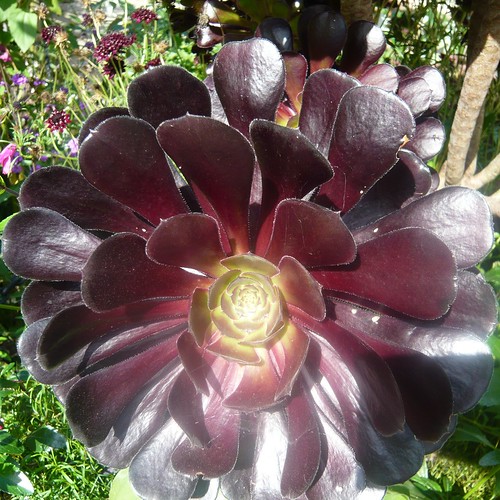
This fine specimen Aeonium arboreum is growing outside in an area sheltered from wind  rain and frost. The variety is Schwarzkopf in honour of the deep purple leaves that look almost black. Others varieties of ‘Tree Aeoniums’ include Atropurpureum a dark red and Variegatum a creamy white with green is an indoor plant nicknamed ‘Youth and Old Age’.

Aeonium arboreum is a bushy perennial with stems crowned by a rosette 6-8″ across. It bears golden flowers in spring on 3 year old stems that then die. It can be grown in a large pot and brought into a conservatory during a hard winter.  Aeonium arboreum need a mineral rich soil so a mix of clay and sand is often used. Keep the plants on the dry side during winter and away from frost. Propagate by removing small rosettes with a piece of stem and potting up in sandy soil. Keep shaded whilst rooting.

They are also sold as houseplants and need a bright airy window sill where they will form a neat compact plant. For the rock garden you may want to try Aeonium haworthii ‘Pinwheel’ which bears rosettes of blueish green with red tinged edges. This grows 2′ high and spreads 3′ with freely branching stems.


It is March and my Aeoniums have survived the winter so far but snow is forecast! I left them outside in a home made cold frame to protect from the wet but now I am panicing.

Growing Food for Fussy Kids

Growing Food for Fussy Kids

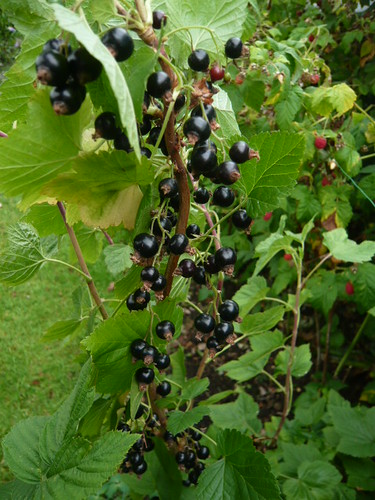
Lateral thinking can get fresh garden produce down the little darlings throats. The Ribena tree or apple juice tree can create drinks and breakfast cereal additions. Many veg can go in a blender or be added to favourite dishes in small quantities disguised as necessary.

002

How can you get children to eat their ‘Greens’?

If your kids are too fussy when it comes to  food from the ground rather than from an advertising packet the here are some tips and ideas for you.

Growing Kids Food

  • Involve children in the growing process. Give them a small plot and some big starters like onion sets, part grown seedlings or pea seeds.
  • Look for coloured varieties that are attractive to grow and tasty to eat, particularly important for brassicas such as purple sprouting.
  • Give fruit and veg interesting names like the Ribena tree above or the Harry Potter Potato.
  • Choose food they would eat if packed in a tin or freezer, such as Peas, Sweetcorn or even Carrots.
  • Cucumbers and courgettes are easy to grow and do not have strong tastes to put off the kids.
  • Kids can pick there own mange-tout or sugar snap peas and eat them pod and all.

Do Not Forget Fruit

  • Sweet and palatable this is easier stuff to get the kids eating away.
  • Soft fruit like Strawberries and Raspberries have juicy, attractive  red fruit that can also have a bit of sugar and cream added.
  • Rhubarb is the subject of several children’s jokes, it  is easy to grow and tastes great in cooked puddings.
  • Apples can be grown on small low growing rooting stock so the apples can be in reach of the children for picking. Try Ballerina types.
  • Grapes can be a good crop if tou have a sunny spot to get the natural sugars working.

5 a Day for Kids for Amazon

Book Cover