Browsed by
Month: December 2011

Pineberry – The White Strawberry

Pineberry – The White Strawberry

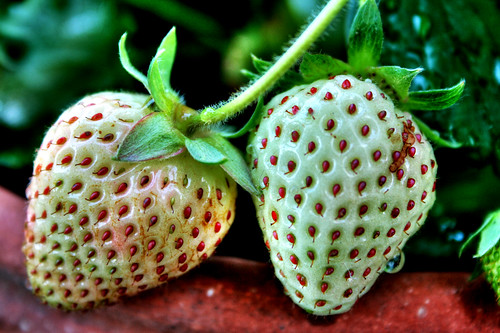
Nature: Unripe White Strawberries

Suttons Seeds and some supermarkets like Waitrose want us to experiment with white strawberries. A contradiction in terms as strawberries are strawberry coloured. I am not usually keen when a retailer pushes a product in my direction and it will be sometime before I consider growing white strawberries deliberately.

White Strawberry or Pineberry

  • White strawberries are a special breed of strawberry that taste a bit like pineapple. For differentiation they are now called Pineberries but they are a hybrid of Fragaria chiloensis and Fragaria virginiana.
  • Pineberries start off green, gradually turning paler as they ripen. By the time the deeply set seeds turn deep red, the white fruit is ripe.
  • When the fruit is almost totally white but studded with red seeds it should be sweet and juicy enough to eat. The fruit is normally ready in May.
  • The colouring is the reverse of the usual strawberry with white seeds on a red fruit. Flowers and plants are similar in appearance
  • Pineberries are slightly smaller than most commercially grown strawberries a bit less than an inch in diameter.
  • Best grown in a greenhouse with fruit lifted from the compost with straw or coir.
  • Gardeners Tips
    See out other article Growing Juicy Red Strawberries

    credits
    Photo kingdesmond1337 CC BY-NC-SA 2.0

Tips for Starting Gardening

Tips for Starting Gardening

spring 034

Starting Gardening? Try these tips

You don’t need a garden or even a window box to start your gardening journey. There are lots of ways to have fun and build up your skills and appreciation of gardening.

  1. When you can recognise plants in hedgerows and know a bit about them
  2. When you can smell plants in a public garden and appreciate the effort needed to get the display just so
  3. When you know what flowers to buy from a florist and how to care for them
  4. When you join a local gardening or horticultural club and get a social network plus gardening insights and support.

– then you are starting to be a skilled gardener.

That is not to say you shouldn’t have your own garden space. The therapeutic effect of your own patch of soil should not to be ignored – in my opinion it can’t be overstated.

  • Growing your own choice of plants will be reward in it’s self
  • Using your artistic and creative style will create a personal and individual garden space that repays your planning and execution of the core gardening skills.
  • Features you include can help the family, the environment, the locality and even your culinary experience if you grow herbs fruit and vegetables

So some simple tips for new gardeners

  • Look around you at anything that grows.
  • Consider why and how a plant is thriving is it naturally occurring or placed, is it a natural time or place to find it, how might it survive and reproduce
  • Pace yourself: the garden can’t be rushed and there is a time for everything. You need to be ‘able to stop and smell the flowers’ because there will also be a fair bit of work involved once the gardening bug bites.
  • Don’t forget gardening is for fun – if its not fun its horticulture
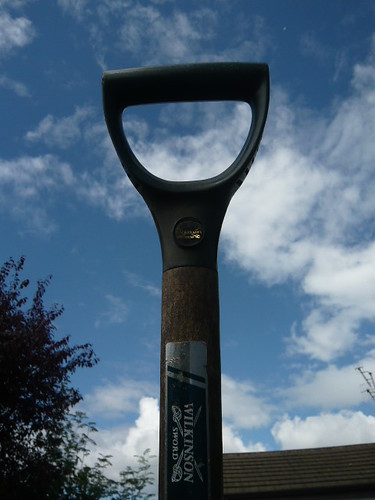
D Handle

Starting Digging – It is enough to make you spit!

.

You may spit in more ways than you think because I want to start with some definitions, then after your hard work you may end up with an aching back.

A spade is the key digging tool costing from £15-£75 and coming in several sizes and blade shapes but an average one that doesn’t lift too much and has a stainless blade is my favourite and cost me £34.

A fork is the pronged implement used for breaking up compacted soil or turning material like straw or garden compost.

A spit is the spade depth of a hole about 12 inches

Double digging is where a row one spit deep is removed to form a trench. Then the base of the trench is dug again often with a fork and to include compost. The next row is then put on top until at the end of the patch the first soil removed is replaced.

If double digging try not to get sub-soil brought up to the surface. This is the compacted layer of clay, shale, rock ledges, gravel beds, deep sand, or hardpan under the surface of good soil that is so deep it hasn’t got any accessible nutrients or bio activity may make the development of garden soil extremely difficult or impossible.

Tilth is the top soil that can be broken down into finer crumbs of soil for planting and seed sowing

A rake is used for weeding and to even out lumpy soil and create a good tilth

Reasons for digging:

  • To get necessary air into the soil,
  • To allow water to penetrate,
  • To assist drainage if the soil is heavy so that plant roots can penetrate deeper without becoming waterlogged,
  • To help worms and friendly insect activity.
  • To incorporate organic matter such as garden compost
  • To help remove weeds particularly those with long roots
  • To get a good soil structure and open tilth

Double digging probably isn’t worth the extra effort in most cases unless you have a particular problem eg with drainage or want to grow particular crops eg. parsnips.
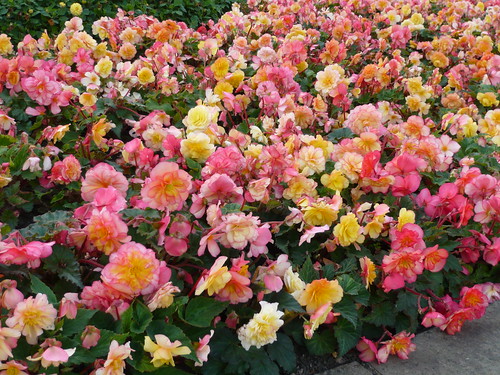
Beggars Begonias

Starting to grow plants – then avoid these problems

  • Avoid exotic plants from warmer climates – they are likely to be delicate and struggle in the UK through lack of sun, warms and an excess of rain. Ask your garden center if unsure.
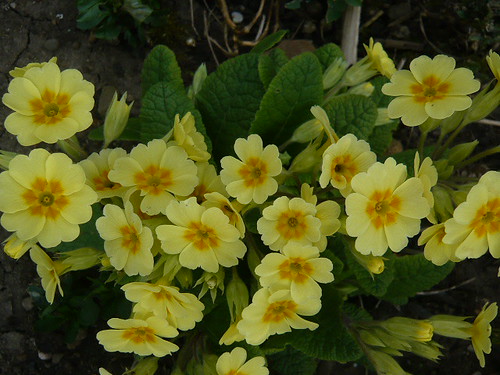
  • Look around your area and see what does well – from my window I can see holly and hawthorn with some yellow forsythia in the hedge. Then there are daffodils and polyanthus under Choysia (Aztec Pearl) and flowering currant shrubs with roses that are just coming into leaf.
  • If you are new to gardening try to avoid expensive disappointments that may put you off.
  • Avoid seeds until you have some experience unless you are really keen. They can be labour intensive and not as successful as seedlings, plug plants and plants bought ready grown.
  • To cover a large area and are keen to try seeds look for those that you can sow direct into the ground the bigger the seeds the better for spacing eg Sunflower, Nasturtiums, Sweet peas, Calendula and at the smaller, scatter it for fun end Night Scented Stocks, Californian poppy (Eschscholzia californica)
  • Avoid buying plants that look like they are in distress. I have just seen a large display of dead and dying plants and seedlings inside a hot, airless, dry national chain. Otherwise good seedlings were withered and discounted or just plain dean. Shrubs in plastic bags with a printed wrapper were showing ‘forced’ leaves that were thin spindly and weak. Not only did I leave the plants alone I left the shop alone and will do in the future.
  • Avoid planting at the wrong time. I know you wouldn’t plant out in the garden your house plants in the middle of winter, would you? In fact most plants are best planted after the danger of frost has passed – some time in May depending where your gardening.
  • By the same token it is no use planting a fruit tree in May for a crop that year as it needs to drink through summer – in fact the backend is better as it then has time to settle.
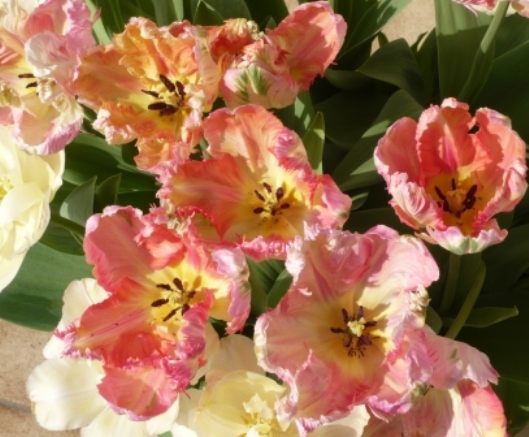
  • Spring bulbs also need a period of winter time in the ground so plant Daffodils in Sept/Oct and Tulips in November to give you a better spring show.

Other Resources

Royal Horticultural Society RHS ‘Gardening for All’
National Council for Conservation of Plants and Gardens ‘Conservation through Cultivation.’
Garden Organic National Charity for Organic Gardening.
BBC Gardening
Nuts for UK Gardens

Nuts for UK Gardens

Book Cover

Not all nuts are suitable for UK garden growing. True nuts include Sweet Chestnuts, Beechnuts, Acorns, Hazelnuts and Hornbeams. True nuts are a simple dry fruit with one seed in which the seed case becomes very hard on maturity. True nuts do not split apart like Brazil nuts or Horse chestnuts but the seed and the fruit are one and the same.

Larger Trees for Larger Gardens.

  • If you have the space for real trees then consider Walnuts and Sweet Chestnuts. You will get a good crop from trees that can eventually grow to over 30 feet high.
  • Walnuts are not nuts but are botanically called ‘drupes’. This is a fruit with a fleshy outer coating enclosing a hard shell that contains a seed. The best variety to grow in the UK is Broadview as it is slightly resistant to frost during flowering. It is a compact tree that crops well at an early stage.
  • Sweet Chestnuts produce Marron nuts or Chestnuts. Marigoule variety produces large nuts after 2-4 years.
  • If space is limited you can grow them in a root bag.

Hazel Nuts and Relatives

  • Unlike other fruiting trees, the hazelnuts bloom and pollinates in the middle of winter. Wind carries the pollen from catkins (male flowers) to small red female flowers, where pollination occurs. The flowers remain inactive until spring, when fertilisation occurs and the nuts begin to develop.
  • Cobnuts are similar to Hazels, easy to grow, productive and ornamental. They have catkins and need two varieties close together for cross pollination
  • Cosford is one of the sweetest flavoured cob nuts with thin shells.
  • Kentish cob is a popular Filbert or European Filbert Corylus avellana with long nuts well flavoured nuts. The Purple Filbert produces striking catkins.

Nuts for warmer climates

    Peanuts are not nuts, it may be hard to believe but they are peas or at least part of the Pea family. If you compare the pods of peas and peanuts you will see what we mean. Monkey nuts, groundnuts, Manila nuts, earthnuts and goobers are all just other names for peanuts.

    Cashew nuts are drupe seeds from the poison ivy family and the seed lining contains an irritating lining. Almonds, pistachios and pine nuts are not nuts either.

    Coconuts must be nuts then, no I am afraid not they are another drupe. Nor do coconuts contain coconut milk but coconut water. Coconut milk is made by grating the flesh into water then straining it.

    Macadamia nut is just a creamy white kernel and Brazil nuts are seeds in a pod.

    Drupes are also fleshy fruit, such as a peach, plum, almond or cherry, usually having a single hard stone that encloses a seed which may be why they are also called stone fruit.

    Almond is also the name of the edible and widely cultivated seed of Prunus dulcis a tree popular in the Middle East and Asia.

My Nuts
“My Nuts by alfromelkhorn, on Flickr many thanks Attribution-NonCommercial-NoDerivs 2.0 Generic (CC BY-NC-ND 2.0)

Pelargoniums are Something Special

Pelargoniums are Something Special

Something Special

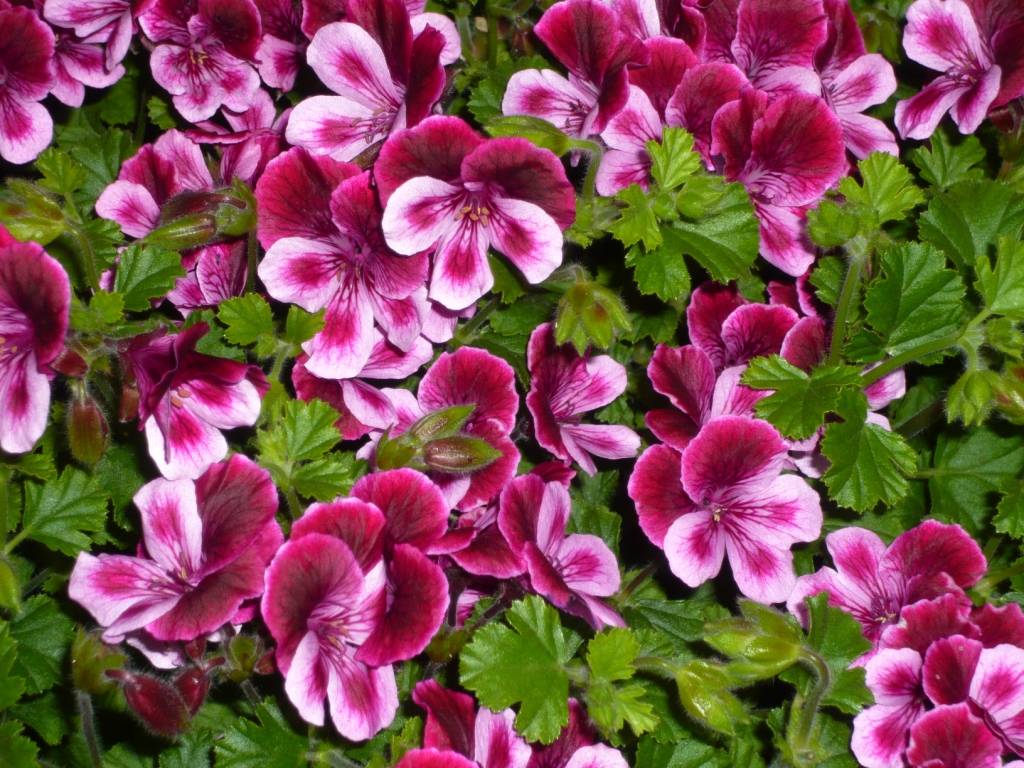
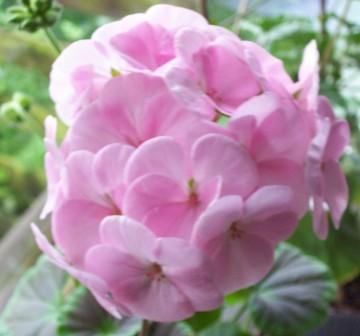
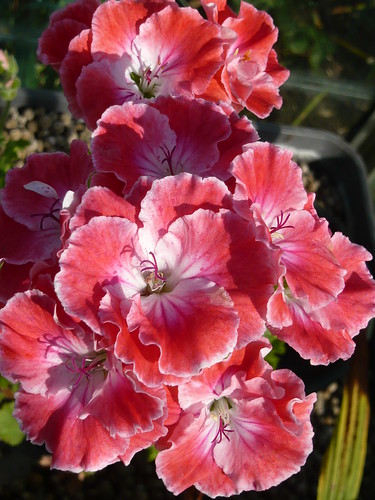
This pelargonium was sold to me By Fir Trees Nursery as called ‘Something Special’. The colour in bloom is clearer and softer pink than I can get on the computer screen and is something special in appearance.

In 2012 they have 3 brand new releases and have many new introductions which are new to us throughout the catalogue.

[‘The first new release is a decorative regal from a hybridist in Italy Riccardo Gallucci.
I was given a small plant of ‘Donatella Love’ by Derek Lee about 2 years ago who thought it unusual-as did we when we saw it flower. It is a striking variety and very free flowering with an unusual colour combination. I later found out from Derek that it was bred in Italy and he would put me in touch with Gwen Ward who passed my details on to Riccardo who kindly agreed to let us release his wonderful variety so that it available in the UK for you all to grow and enjoy. ‘Donatella Love’ is named after Riccardos wife.

Pelargonium

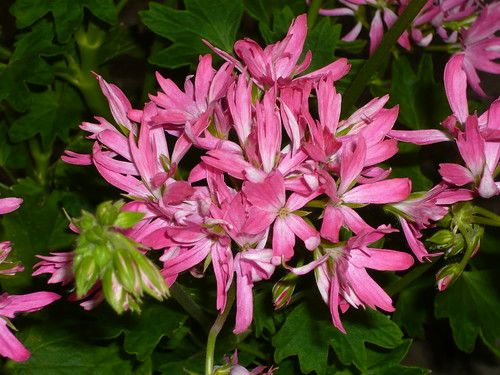
The second new release is a sport found on our nursery about 3 yearsago from ‘Quantock Double Dymond’. It has green bracts rather than petals which gives the appearance of a green flower. It starts off as a small green rosebud shaped bloom, then as the weeks go by these extend to form little green catkins which gave us the name. Like ‘Quantock Double Dymond’ it has a lax habit so is suitable for small hanging pots or around a trough edge. It is a very tidy plant as it doesn’t drop petals anywhere! It is a compact plant and a relatively slow grower.

The Third and final new release is an angel bred by John Green and named after Pearl Sulman who many of you know as a very good nurserywoman and grower of pelargoniums until her retirement in 2010. Pearl along with husband Brian Sulman won many gold medals over the years with their displays of pelargoniums, specialising in miniature, angels and regals among a range of other pelargoniums. John raised the variety for Pearl to release at Chelsea 2011 but unfortunately due to Pearls illness they had to retire at the end of 2010 so John asked if we would release the variety and of course we were delighted to. I hope you will enjoy growing ‘Pearl Sulman’, a very free flowering variety.’

Pelargonium

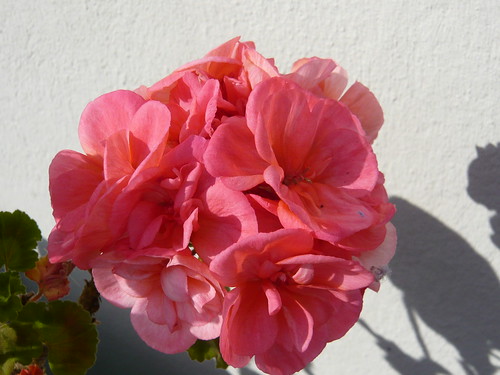
This variety looks a deeper shade of pink in the evening sunshine.

I bought these plants when passing a specialist Fir Trees pelargonium nursery in Stokesley

It is said to be a good exhibition variety and my plant has a good habit and several strong flower stems each with numerous pips.

The leaves are small and not deeply zoned with the usual ‘geranium’ fragrance

Pelargonium regal

This Regal Pelargonium waited until late September to show any buds but the flowers were worth waiting for. I will cosset this plant through winter.

Pelargonium

Photos are just a representaive sample of the pelargoniums you could be growing for next year

Decorative Callicarpa Berries

Decorative Callicarpa Berries

Callicarpa bodinieri

Callicarpa Beautiful Berries

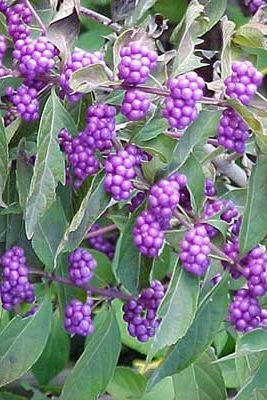
  • The violet-purple beads formed in clusters make these Callicarpa berries look exotic.
  • Every branch is strung with these bead like berries through autumn and early winter and lasts for a month once cut for indoor decoration.
  • This deciduous  shrubs can grow to 10 feet tall and may be lightly tidied up with a bit of trimming or pruning when the buds begin to swell in spring.
  • Plant in a sheltered position and avoid any excessive conditions. Put several plants together for good pollination.
  • The variety Callicarpa bodinieri ‘Profusion’ is freely available and flowers pink in July and has attractive young and old leaves.
  • Callicarpa dichotoma is commonly called the Beauty Berry.
  • The seeds are attractive to birds.

Callicarpa

Callicarpa Varieties

  • Callicarpa bodinieri or Bodinier’s Beautyberry is an ornamental shrub. It is grown in gardens for its decorative purple light-berries.
  • Callicarpa dichotoma is also called Purple Beautyberry or Early Amethyst.
  • Callicarpa japonica is related to Verbenas
  • While the Callicarpa berries are not poisonous to humans they are very bitter. You never see blue fruit (or do you know better?)

Callicarpa (Beautyberry) at Streissguth Garden in Winter

Credits
Callicarpa (Beautyberry) at Streissguth Garden in Winter by brewbooks CC BY-SA 2.0

Help Growing Lobelia

Help Growing Lobelia

Photo cc by slideshow bob

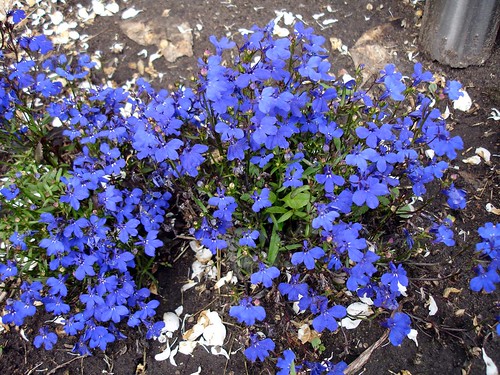
Lobelia erinus or annual Lobelia is renown for it’s strong blue summer flowers that combine well with the white of Alysum. Thet are also capable of making a strong statement when grown in a container.

Description of Lobelia

  • The single flowers of Lobelias have small, round leaves and flowers up to 1/2 inch in diameter.
  • Some varieties are compact and mound forming whist others are grown for their trailing habit.
  • Lobelia flowers from July until October in white, purple or blue shades and some varieties are bicoloured.
  • Plants are low growing dependent on variety.
  • The plants have a light airy and frail but are covered in flower.

Cultivation Tips for Lobelia

  • Easy to grow from seed or buy as ready grown plants. Young plants can be slow and frustrating to develop.
  • Lobelia grows best in cool areas.
  • Space four to six inches apart in the garden or in containers.
  • Sow 3mm (1/8in) deep in early spring at 70-75F in a good seed compost. Keep soil damp but not wet, sealing in a polythene bag after sowing is helpful.
  • Germination usually takes 15-21 days. When seedlings are large enough to handle, transplant and grow on in cooler conditions.
  • Gradually acclimatise to outdoor conditions for 10-15 days before planting out after all risk of frost
  • Lobelia like well-drained but light yet moist soil in a cool spot.
  • Can be grown as pot or container plants in cool well ventilated areas with plenty of light.

Lobelia
Creative commons from daryl_mitchell/2645365189/

Special Growing Tips for Lobelia

  • Use Lobelia for edging borders in formal planting or as spot colour in rock gardens, or in front of taller plantings beside walks and pathways.
  • Trailing Lobelia are among the best plants for window boxes, pouches and all types of containers.
  • Older varieties in Ultra Cascade mix, flower early and fade, whilst the newer varieties last longer, so mixed together you’ll have a full season of stunning lobelia colour.
  • Keep Lobelia well watered.

Varieties, Species and Types of Lobelia

  • Mounding forms such as Crystal Palace have deep-blue flowers and bronze foliage
  • Cambridge Blue has sky-blue flowers and Rosamund flowers cherry-red.
  • Favourite trailers such as Blue Fountain ahve deep-blue petals with white eyes.
  • Blue Cascade and White Cascadeare appropriately named.
  • ‘Superstar’ whose flowers are truly dramatic with unusually large bloom in deep indigo blue with a bright white eye is a relative new comer.

Horticulture Sources and Advice