Browsed by
Month: October 2009

Colour Temperature in the Garden

Colour Temperature in the Garden

The quality of light can have a strange impact on the way flowers and plants look in both the garden and photographs. Light levels may change with the seasons, weather or surroundings and a cloudy sky will produce a different effect to a clear blue, early morning sky. The greatest single effect is caused by colour temperature as the photographs reveal.

Colour Temperature
Light’s colour depends on the temperature, if you heat an iron bar, it will eventually start to glow dark red . Continue to heat it and it turns yellow and eventually blue-white. We say that red is a “warmer” colour than blue! Colour temperature is measured only on the relative intensity of blue to red. Early morning light has more blue whilst early evening has more red. (see below for a small graphic, measuring temperature of light in degrees kelvin, from Ephotozine)

Tips
Oranges and red-yellow flowers look even better in early evening. Blue purple and some green looks best in the morning.
Quality of colour is in the eye of the beholder so experiment.

Light temperature

Fallen Leaves Good for the Environment

Fallen Leaves Good for the Environment

The fallen leaves of Autumn are a sign of the the hope and regeneration of future seasons. You can pick up inspiration from the sight of golden brown and russet coloured leaves. Who has not been enraptured, at some stage in their life, by the scent of damp leaves or the rustle of crisp, dry leaves kicked up as you pass through a leaf strewn glade.

Uses of Leaves

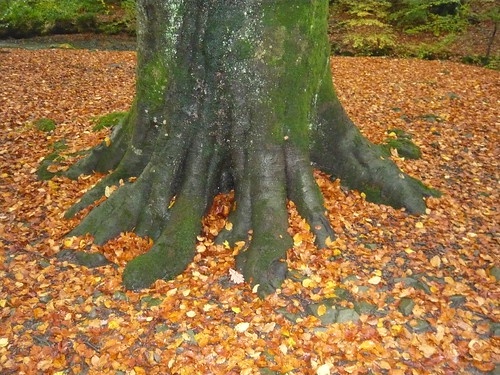
  • Broad-leafed trees shed their leaves annually to create a carpet of slowly rotting organic matter in woodlands.
  • The carpet of leaves acts as a mulch and encourages worm activity that takes air and water down to the tree roots.
  • Leaves are habitats of a variety of creatures and provide nesting and hibernation resources.
  • Gardeners can collect leaves separately from the compost heap and they will rot down to form a good quality leaf mold. It is a cold and thus slower process than composting.
  • Shredded leaves can be added to the compost heap, in small quantities,  as part of the ‘brown constituent’ of the pile.

You can collect fallen leaves with a multi tine rake
Book Cover

For a labour saving job you can buy a garden vacuum from Amazon.
Book Cover
Read more Easy tips on Composting leaves

Tree Paeonia Autumn Leaves

Tree Paeonia Autumn Leaves

Some Paeonia plants are grown for the size, colour and scent of the flowers. This picture caught my attention with the dark red leaves on the three year old tree turning a magenta red offset by the orange red of the Geum Mrs J Bradshaw. Tip Select your Geums with care as many of the 50 species are weeds called Avens.

Tree Paeonies make handsome shrubs up to 6 feet high with very large decorative flowers. A couple of varieties have AGM including the large yellow flowered Paeonia Lutea ludlowii and Paeonia delavayi with crimson flowers are attractive anthers.
Various named varieties can be found in shades of pink, yellow and red and have deeply cut leaves. Look out for the fragrant ‘Souvenir de Maxime Cornu’ or the double yellow Chromotella.
Protect young plants from severe frost but mature specimens will be reasonably hardy.

Eucalyptus Trees in Britain

Eucalyptus Trees in Britain

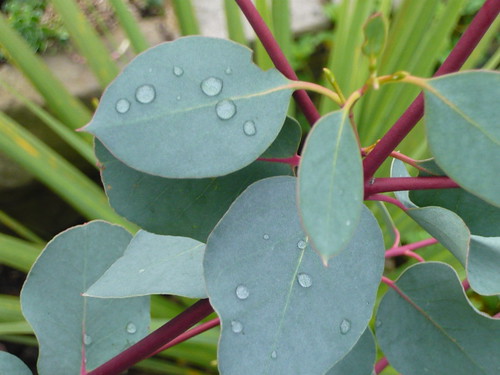
Eucalyptus or Gum Trees are fast growing shrubs and trees best noted for their attractive scented leaves and stems. They tolerate a variety of soils preferring a deep loam. The leaves on this young tree are still coin shaped but will develop as the tree matures.

Gardeners Tips

  • You can grow Eucalyptus as a short lived shrub and do not need to let it grow to full height. Dig it out when it gets mis-shapen.
  • Plant in spring so roots can develop in the warmer soil but they are surprisingly hardy for trees from Australasia.
  • Plant near a Cotinus or a red Acer for contrasting colours.
  • There are 20 varieties of Eucalyptus seed available from Jungle Seeds
  • See Australian trees including Eucalyptus Snow Gums at Marks Hall garden and arboretum Coggeshall, where 200 Eucalyptus trees have been planted and ‘on warm days the oil aroma provides a heady scent’.
Weeping Beech Fagus Pendula

Weeping Beech Fagus Pendula

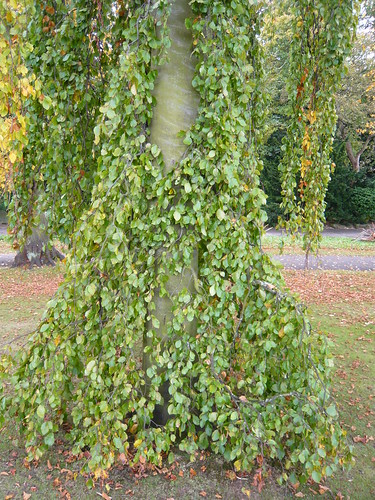
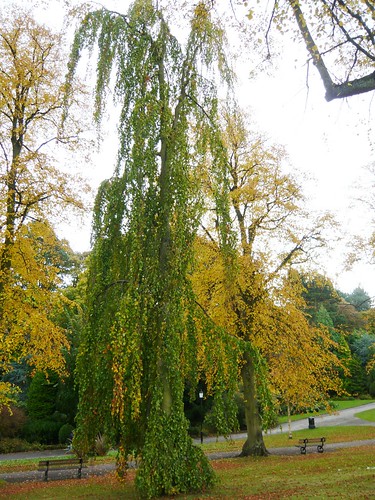
Beech or Fagus are a small genus containing some of the most noble trees that can make a fine specimen tree. This weeping Beech’s full name is Fagus Sylvatica Pendula or the Weeping Beech although I have christened in the Crying Beech.
It is a large and spectacular form with the main stem or trunk covered in droopy hanging branch lets. There are several related weeper but this tree was quite singular in it’s habit and grew to 50 feet yet still looked immature.

Fagus sylvatica ‘Purple Fountain’ as an excellent tree with cascading branches and dark, bronze/purple/green foliage. Very similar to other weeping beech but much more columnar in shape. Leaves turn more green throughout the summer.


Beech in Autumn at Valley Gardens Yorkshire.

Amazon supply Beech trees and Purple Beech. but a nursery would have a wider selection.

Autumn Crocus Naked Ladies

Autumn Crocus Naked Ladies

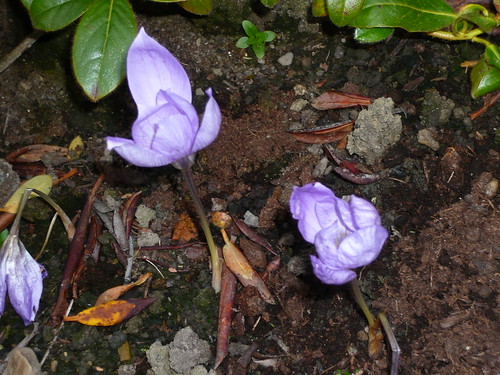
After seeing Naked Ladies at Harlow Carr gardens in Harrogate I decided to plant some Autumn crocus for myself. The blue Crocus speciosus were planted under some rhododendron shrubs and the colour has been a good strong blue. The corms would have flowered without being planted so it is little to do with the peaty soil but hopefully the leaves that follow the flowers will now help bulk up the Crocus for future years.

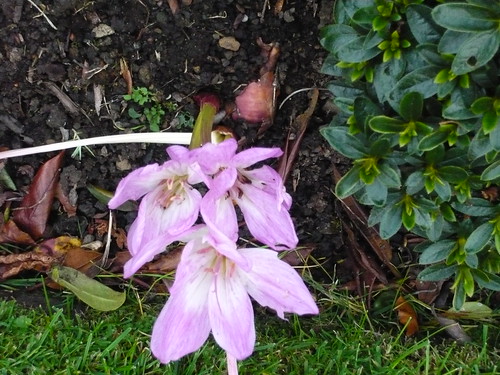
The blown flowers on the pink crocus were from far larger bulbs. As you can see they are too near the surface but many Crocus have the ability to use their roots to pull the bulbs deeper in to the soil. I will not be disturbing them to find out. I will cover with some more soil if only to deter mice from eating the bulbs.

Even now if you find bulbs on sale or special offer it may be worth buying some of these interesting bulbs.

War Memorial Flowers Chosen with Care

War Memorial Flowers Chosen with Care

This war memorial is still well adorned with flowers in late October. The Sweet Alyssum ‘Carpet of Snow’ is doing the job of providing a pervading scent. The Geraniums with white and green bicoloured leaves are probably Caroline Schmidt or a relative of Frank Hedley but the variety is less important than the over all effect.

The setting was evocative of Peace but in November the reminder of less peaceful times will be demonstrated by the Poppy Wreaths and tributes. The Poppy, long a symbol of death and rebirth and now of wartime remembrance, is Papaver rhoeas, the Common Poppy or red flowered Corn Poppy.

British Legion Poppy Appeal donation site

Formal Garden Design

Formal Garden Design

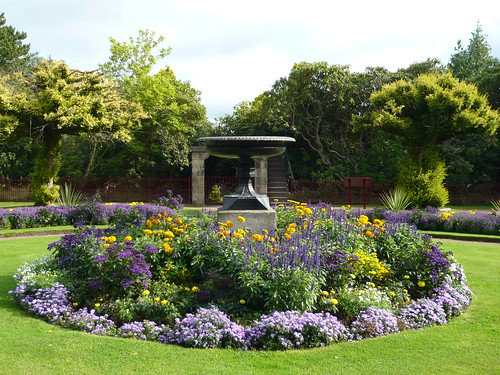
Not everyone has the space or finances to design and stock a formal garden on this scale but a bit of design thought can go a fairway to achieving your objectives. Gardening is primarily about plants but the setting, presentation and juxta-positioning combine to make your unique garden design. The best tip I can give is ‘design to suit and please yourself’ as you are the one who will be spending most time in the garden.

Stages of Garden Design

Make a wish list of your priorities and the features you would like to incorporate or remove. You may not like all features equally so grade priorities or mark them into order eg Essential Flowerbed, Lawn, Garden seat, Vegetable patch – Desirable Compost heap, Shrubs, Greenhouse, Fruit trees – Optional Pond, Patio, Rock garden, Wildlife area, Sculpture etc.

Measure and sketch the garden taking into account the fall or slope of the land. Mark the sun, prevailing wind and rain shadows on the plan. Make your first mistakes on paper it will be easier and cheaper to correct.

Put the plan on to gridded paper so you can do the plan to scale. Cutouts may help. Start with permanent features like the house, boundaries and fixtures that you know will not move. Do several sketches to explore ideas and  do not worry about individual plants at this stage they can change.  Look at garden books and photographs for inspiration if you are struggling.

When you get the bones of a design that you like, fill it out with textures like paths and focal points but still resist planting schemes. Peg out the design on the ground, using rope for curves, so you can get a better feel.

Prepare a planting plan to give shape and character starting with tall and feature plants. Keep an eye on planting distance, height and spread of chosen plants. Check compatability, colour shape and form so you plant to achieve a harmonious design. Finally fill in with low growing plants and ground covers.

Drafting  your formal garden design on paper gives you opportunity to test ideas and visualise what might be possible. It can and should be a happy and interesting prelude to your garden implementation phase.

Check out the BBC for design ideas
Cyclamen for Woods and Shade

Cyclamen for Woods and Shade

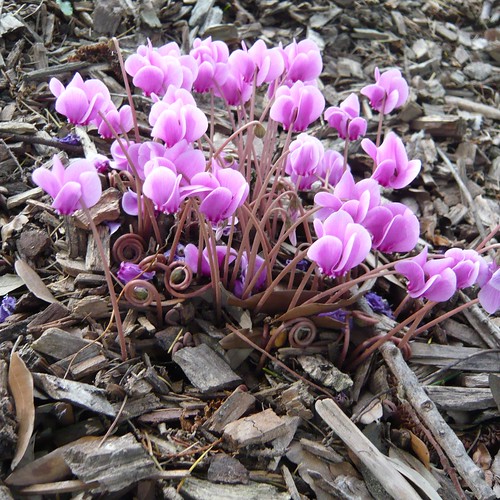
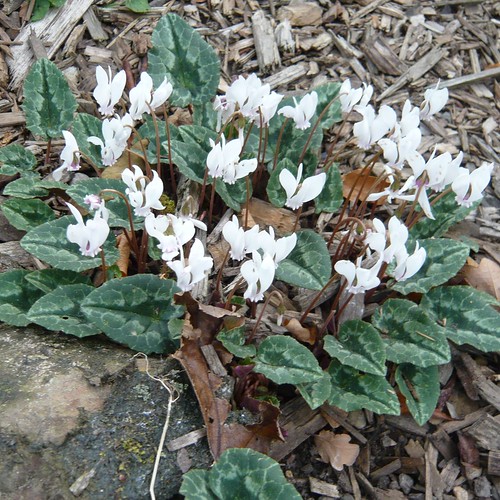
Cyclamen are happy in dappled shade and grow well under trees. If you want to imitate suitable conditions use un-composted bark chippings as in the photograph.

Ivy-leaved Cyclamen or Cyclamen hederifolium also formerly  called Cyclamen neapolitanum have numerous scented, white or light pink flowers in autumn that show before the leaves grow.
This species readily naturalizes and seeds prolifically.
Like other cyclamen, it resents being transplanted and corms can grow up to a foot in diameter.
Roots emerge from the upper surface and sides of the tuber and not from the lower surface.
Cyclamen like a light soil and good drainage protects the corms from rotting.

Round-leaved Cyclamen Coum flower during the early spring from January to the middle of March. They prefer some protection from bad weather.
They make interesting alpine pot plants.

Book Cover

‘Cyclamen: A Guide for Gardeners, Horticulturists and Botanists’ by C. Grey-Wilson is available from Amazon

Black Eyed Susan or Susie

Black Eyed Susan or Susie

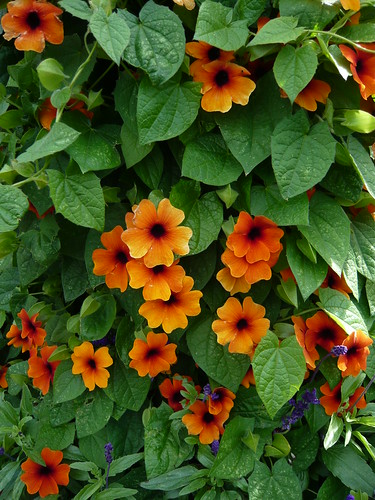
This simple annual climbs or clambers upto 2 feet tall. Provide a simple support with a triangle of hazel twigs or canes. Black Eyed Susan do best in a sheltered position or as a conservatory plant. Also called Thunbergia Alata they are annuals that should grow easily from seed.
The late summer flowers are intense in colour and the name comes from the dark center or eye. Cream, white, yellow and orange varieties are available.

Thunbergia fragrans Angels Wings has twining stems with 2inch wide white flowers. Whilst notionally it is perennial it blooms well in the first year and can be treated as a half hardy annual.

  • Black Eyed Susan at Thompson & Morgan