Archive for August, 2009

Grow your Own Rocks

Artificial rocks can be created cheaply and easily if you make your own from Hypertufa.

  • Make a batch of rocks by digging several holes in the ground the size and rough shape you want the rocks to be.
  • Line the holes roughly with thick polythene, do not worry about the odd crease and fold as this will add texture to your rock surface.
  • Mix 2 parts sand, one part cement and two parts coir together in the dry state. You can add cement die, buff or yellow seem to work well.
  • Add water and mix in to create a fairly stiff mixture.
  • Put the mix (Hypertufa) into the lined holes pushing in into the bottom and sides. You can leave a central hole but make sure there is at least 2″ of mix all around. This makes the rocks lighter and easy to move. You can also strengthen with bent chicken wire.
  • Leave for a couple of days until the mix is totally dry then lift out of the hole and peel off the plastic.
  • If they are a bit shiny you can rough them up with a wire brush but once in the garden they will soon weather, grow mosses and lichen to look quite natural.

There are other several Hypertufa rock recipes you could use. Some are more useful for covering an old sink or pot to make a hypertufa plant pot.

Variation 1 1 part Portland cement, 1 part sand, 2 parts peat
Variation 2 1 part cement, 1.5 parts sand, 1.5 parts peat
Variation 3 1 part cement, 1 part peat, 1 part perlite, 1 part fiberglass mesh.

Comments

Two Top Ten Flowers

Gardeners World ran a series looking for Britains favourite top ten flowers. The BBC didn’t name specific varieties so I have added Gardeners Tips

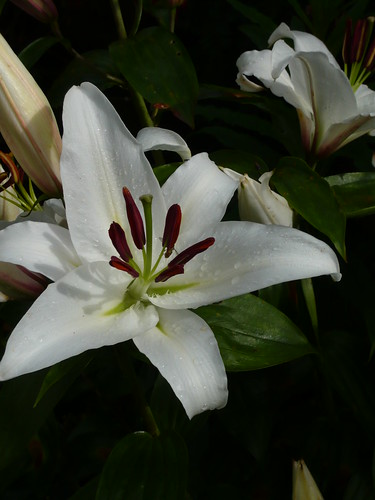
  1. Lilies -  Soak in water water for an hour lay sideways on a bed of grit and shade the root run.
  2. Roses – Encourage growth from the ground by planting deeper than they originally grew.
  3. Daffodils – Feed with tomato fertilizer as they finish flowering and leave leaves for 6 weeks.
  4. Fucshias - Pinch out the tip when they have 4-6 pairs of leaves.
  5. Delphiniums – Treat for slugs in Autumn so they don’t feed on the roots all winter.
  6. Clematis – Plant 6 inches deeper tha the top of the rootball and keep roots cool.
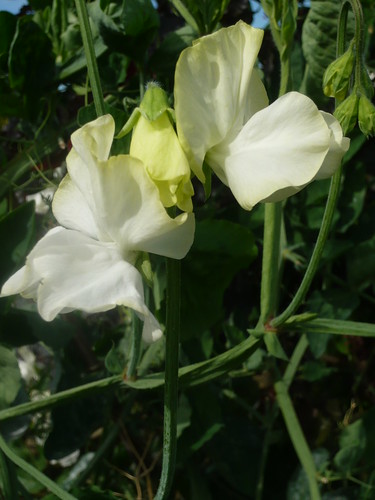
  7. Sweet Peas – Train the strongest side shoot not the main stem for show blooms.
  8. Primulas – Mark plants in flower if you want to split them in June.
  9. Poppies – Cut oriental poppy foliage right back after flowering and stake early.
  10. Irises – Plant in groups of 3-5 to make quicker clumps.

Bulb historian Anna Pavord has also chosen her favourite top ten flowers and surprise, surprise they are all bulbs or corm based flowers. I have put them into alphabetical order

  1. Arisaema candidissimum With hoods and spathes like wild Arums Read the rest of this entry »

Comments

Autumn Flower Choice.

Golden colours are prominent amongst Autumn flowers and leaves.  These Heleniums are supported by a lighter cream coloured Kniphofia (I can’t call this colour a Red Hot Poker but that is the common name). Kniphofia Rooperi varieties are a bit later flowering than other red hot pokers.

Good Autumn Doers

  • Chrysanthemums are coming into there own and you can buy ready to flower domes of Showmaker pot mum varieties.Use them to plug gaps or on the patios using the original pots. They will last for 6-8 weeks until the frost gets them. The stools are not worth saving as they tend to produce leggy plants even from cuttings in the second year.
  • I have bought some winter flowering pansies to put near the house and in pots. They flower in mild spells through winter and usually come good in March.
  • Japanese Anemones are flowering in clumps of white and pink blossom and can be mixed with Aster frikartii Monch or Phlox.
  • Kaffir lilies like wet soil so this summer they have been getting ready for a good Autumn show. These Schizostylis can be deep red through pinks to a white Alba version.
  • For the house it may be worth buying some small cyclamen which will flower for a long time and can then be planted out in the garden.

Top Tip In expectation of an ‘Indian summer’  keep dead heading your plants and do not rush to tidy up for Autumn.

Comments

Grow Acanthus Varieties

A large clump of Acanthus can produce many flowers on the 2-3 foot stems and you get the architectural leaves thrown in as an extra. The sturdy stems carry a whorl of 30 or so flowers, each producing a shiny, rich-brown, elliptical seed capsule.
Acanthus common name Bears Breeches is a genus of flowering plant named from Greek Akanthos, thorn plant.They were brought to the UK by Romans. An old herbal credits the following treatments which a Roman soldier may have needed:

“The leaves, being bruised or rather boiled and applied like a poultice are excellent good to unite broken bones and strengthen joints that have been put out. The decoction of either leaves or roots being drank, and the decoction of leaves applied to the place, is good for the king’s evil that is broken and runs; for by the influence of the moon, it revives the ends of the veins which are relaxed.”

“There is scarce a better remedy to be applied to such places are burnt with fire that this is, for it fetches out the fire, and heals it without a scar.”

There is a National collection of Acanthus at Hillview Hardy Plants.

Acanthus in Cultivation

  • Acanthus grow in well drained soils, they don’t like to sit in water especially during winter.
  • The herbaceous species are native to dry rocky hills and make striking border plants. They thrive equally well in both sun and dense shade, although they tend to be more compact and flower more prolifically in sun producing more leaves in shade.
  • Acanthus have distinctive leaves at the base and some have fragrant flowers. The flower spikes are useful, when dried, for winter decoration.
  • Acanthus make excellent specimen plants in tubs and pots.
  • Slow to get a hold they can become hard to erradicate once they get going as they grow strongly from bits of root.

Acanthus Varieties

Read the rest of this entry »

Comments (3)

Top Ten Tree Bark to Grow

Bark is the outer covering of main trunks, woody stems, branches and roots of trees and other woody plants, as distinguished from the cambium and inner wood. Many trees grown for bark look better as the tree matures and need to be grown in enough space to develop. Some of the following varieties are best in Parkland or woods.

Top Ten Trees for Bar

  1. The above Prunus ‘Bird Cherry’ bark looks very colourful in strong sunshine.
  2. Acers often have interesting bark try Acer rufinerve with distinctive green bark and patterns of greyish markings particularly good on old trunks.
  3. Betula Papyrifera or the Paper-bark birch has shining white bark, the large leaves turning pale gold early autumn. The native birch bark can be effective but some varieties are dirty grey in colour so take care when selecting plants.
  4. Parrottia Persica has grey bark flaking away in a pattern resembling the London Plane. It is early flowering and the leaves turn brilliant gold and crimsons in Autumn.
  5. Arbutus x Arachnoides strawberry tree has a distinctive trunk and branches that are a cinnamon red.
  6. Zelkova Sinica with smooth grey bark which peels away in scales to reveal a rusty-colored under bark.
  7. Eucalyptus has several species with interesting, peeling, grey bark and scented leaves when crushed.
  8. Juglans Nigra Or the black walnut with grey, deeply furrowed bark is quite striking.
  9. The Scots pine, Pinus sylvestris is too large for most gardens but smooth pink or red bark in the upper part of the tree is worth looking for.
  10. The well-named Redwood Sequoia never loses its astonishing red colour but again it is a large tree.

Read the rest of this entry »

Comments

A Healing Garden

Book Cover

Gardening is good for you not just physically but mentally and emotionally acting as a stress buster and promoting optimistic activity.

Meditation

  • A garden can and should be an oasis of calm so a specific quiet area is worth creating.
  • Make paths long and curving  to extend the journey through the garden. If paths are  narrow you will need to concentrate on where you put your feet and hopefully forget your problems.
  • A solitary seat placed with a calm view can help your contemplation.
  • Water helps with it’s light reflective nature and the gentle sound of moving water can be soothing and calming.


Colour

  • Green is a natural neutral colour often found in Hospitals for its therapeutic effects. It is not hard to combine  foliage like Bamboos, Ferns and Mahonia for shape, texture and the green colours.
  • Red is the most stimulating colour and can increase your heart rate and stimulate your appetite.
  • Blue has the opposite effect generating calm and lowering blood pressure.
  • The colour effect can be enhanced by including a small quantity of the complementary colour orange with blue, green with red.

Aromatherapy

  • Stimulating all the senses means you need some good scent. Lavender is calming and not stressful to grow.

Read the rest of this entry »

Comments (1)

Garden Specimen Eucryphia

Eucryphia can be amongst the highlights of  summer flowering trees and shrubs. Performing in late summer the profusion of scented white flowers on a conical tree can be exceptional. The flowers also have a further profusion of interesting stamens, distinctly coloured pink or yellow.

Specimen Varieties

  • Eucryphia Nymansay has cup-shaped, fragrant white flowers 3inches across, with very prominent bosses of yellow stamens, and elliptic leaves that are strongly toothed
  • Eucryphia glutinosa, is particularly recommended as it makes a fine 25 foot tree with lots of handsome flowers and leaves that colour up in the autumn.
  • Eucryphia milliganii is a smaller evergreen tree with a narrow growing habit. Even young specimens have freely produced flowers.
  • Eucryphia intermedia is frost hardy and extremely free flowering.

Growing a Specimen Eucryphia.

  • Eucryphias are upright and columnar in shape and make natural specimen plants if given the right conditions.
  • Plant it in early spring in moist acidic soil in a sheltered position where the roots are shaded from the sun yet the branches are in good light.
  • Underplant to cover the roots if necessary to avoid warming sun.
  • A good parent should produce good offspring so select from the species above. There are some Eucrphia that can grow to 120 feet tall in there natural habitat.

Eurcyphia growing above a hedge at Parcivall Hall North Yorkshire. The grounds contain several acid loving plants and the under planting included several Hydrangeas. Whislt the gardens are nearly 1000 feet above sea level the shelter of the dales hills and damp conditions suit the Eucryphia down to the ground (Oops)

Other Resources

Royal Horticultural Society RHS ‘Gardening for All’
National Council for Conservation of Plants and Gardens ‘Conservation through Cultivation.’
Garden Organic National Charity for Organic Gardening.
BBC Gardening

Comments

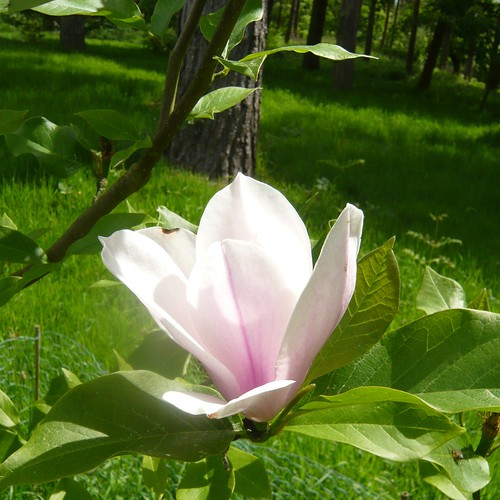
Tips for growing Magnolia x soulangeana

Spring flowering Magnolia x soulangeana can be planted now. Container grown plants from grafts or cuttings will flower sooner than bare rooted shrubs. Check the container is not pot bound and older, grafted plants will perform quicker. It is a case of paying a bit more to get what you want as it can take up to 5 years for Magnolias to start flowering.

Growing Tips

  • Blooms may fall during spells of warm weather so avoid planting in very sunny parts of the garden. Also avoid early morning sun and wind which can damage young growth. Other than that magnolias are hardy shrubs and trees.
  • You can under plant Magnolias as their structure is open but avoid damaging the shallow, delicate roots. I suggest you try Muscari (grape hyacinth) or other small bulbs.
  • You can layer your existing magnolia in August using current year shoots but rooting may take a couple of years.
  • Pruning should not be needed except crossing branches and reshaping. hard pruning can set back flowering for several years.
Varieties to Grow
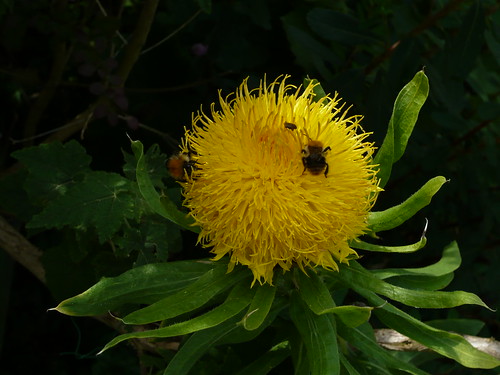
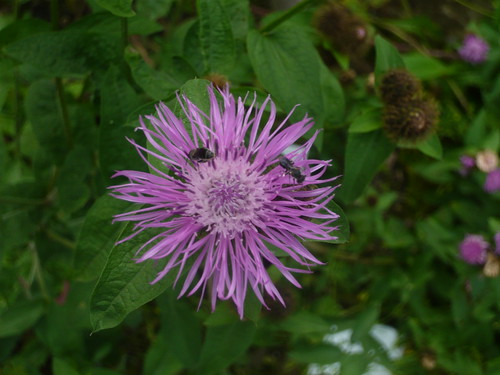
Read the rest of this entry »

Comments

Garden & Allotment Safety

This allotment goes someway towards safety for the gardener, the allotment and the plants.

For personal safety the canes can poke out your eyes so the upturned bottles offer ugly protection. In a garden you can buy designer cane tops and if you spend a lot on the garden this may be a worthwhile finishing touch.

The trailing hose pipe could cause a trip but at least paths are clearly marked out with the tanalised boards that also raise soil levels. Good well maintained none-slip paths are a must in the garden. Poor paths reflect on the plants, no matter how good they may be and paths are visible all year.

Most things and activities can be dangerous if used incorrectly but a bit of garden common sense with sharp objects can save a lot of pain.

For crop safety the mesh netting is keeping the birds off the strawberries underneath. The sun and rain can still get through and this type of fruit cageing is popular for all soft fruit.

The support for Sweet Peas is essential to help them get off the ground and support them whilst growing. They would not be safe from slugs, twisted flower stems and a poor crop yield without some protection.

Beware of communally supplied animal compost it may contain chemicals you do not want on your crops. Hormones and selective weed killers used by farmers and stables are often present in manure.

The site protection has linked fencing, barbed wire along the top and numerous fences and barriers. A bit over done for a garden but essential for an allotment that is unmanned and often out of sight.

Take valuable tools home and have a strong lock up at the allotment and or home. An old rickety shed wont stop the determined.

Valuable features like sculptures and fountains may need to be firmly fixed into the ground using special fittings to frustrate the thieves.

Comments

Poppies from Seed

Georgia O’Keefee painted some brilliant portraits of red Poppies some times upto 3 feet wide and high, even bigger than the real thing in my garden.This photo shows how Red and Green work well together on a canvas or in a garden setting.
Oriental poppies are perennial and most Poppy species are easy to grow from seed of which 50 varieties are available from Thompson & Morgan >poppy Seeds .

The Poppy petals are sumptuous is texture and colour and can be very showy through-out summer if you select a range of varieties.

Read the rest of this entry »

Comments (1)

Next Page »