Gardening Products

Tips for the Gardener

Lawnmowers Top Grass Cutters

Posted: March 7th, 2011 | Author: hortoris | Filed under: Uncategorized | No Comments »

Ransom 3 blademower

The grass cutting season has started and many people will be wishing they had serviced and sharpened their lawnmower a few weeks ago.

The pictured machine is a Ransom 3 bladed model with the third set of blades under the driving seat. Fine for large expanses of grass like those at Harlow Carr RHS Gardens where the picture was taken.

Smaller lawnmowers will be more appropriate for most gardeners. Amazon sell them from less than £40 too over £400.


Types of Mower

  • Hand pushed lawnmowers like the Qualcast Panther 30 Sidewheel Cylinder Lawn Mower is suitable for small areas or the very fit. If you aren’t fit you soon will be pushing this!
  • Electric mowers have a trailing cable and are restricted in there scope and are thus a bit out of fashion. Motor mowers have become progressively cheaper in recent years.
  • Hover lawnmowers can be motorised or electrical; try the Flymo Turbo Lite 330 1150W Electric Hover Lawn Mower.
  • Rotary mowers have a spinning blade running parallel to the ground. An example is McCulloch Petrol 4 Wheel Rotary Mower 2 in 1 Mulch & Collect which ‘does as it says on the tin’ collecting and chopping the grass ready as mulch.
  • A cylinder mower has a spiral bladed cylinder spinning at 90 degrees to the grass and generally has a roller arrangement that leaves the stripes on your lawn. Suffolk Punch SP 12E Electric Cylinder Lawn Mower is a well respected make.
  • Ride on mowers save energy and are great for regular shape lawn areas and rougher grass.

For those interested in history, mechanical objects or lawnmowers they have their own museum in Southport


Gardening Book of the Month March 2011

Posted: March 4th, 2011 | Author: hortoris | Filed under: Books & Publications | No Comments »

Book Cover
Gardening Secrets: From National Trust Experts

This book contains many secrets we wish gardeners tips had published. We have one suburban garden to draw on but the National Trust has slightly more.

Book Contents

  • There is advice on pruning, planting and propagation for anyone who wants to maintain and get the best from their garden.
  • Aim for spectacular results all year round by planting for winter interest or designing your summer flowerbeds.
  • If you want to be greener in your own garden, there is advice on everything from compost making and chemical-free weed control to building hedges for habitats and companion planting.
  • ‘Whether you have a large lawn to maintain, a conservatory, a garden by the sea, an allotment for fruit and vegetables or a small urban plot for planting containers, this little book contains sound, accessible advice from the experts.’
  • Amazon copy

Gardens that Contributed

  • The gardens of houses such as Red House in Kent and Tyntesfield in Somerset.
  • The a knot garden from a 1640 design at Moseley Old Hall in Staffordshire;
  • ‘Capability’ Brown’s landscape garden at Petworth in Sussex
  • Victorian Gardens like Biddulph Grange in Staffordshire, with its wealth of new plants introduced from all over the world
  • The famous plantsmen’s gardens of the last century, such as Nymans in Sussex, Sissinghurst Castle in Kent, and Hidcote in Gloucestershire.
  • Recent acquisitions including Greenway in Devon

Amazon selection of books and DVDs about National Trust Gardens and Properties.


Royal Wedding Plants

Posted: February 27th, 2011 | Author: hortoris | Filed under: Uncategorized | No Comments »

greenery

Red white and blue will be the theme for the Royal Wedding no matter what flowers the bride chooses for her bouquet.

Go with the flow and buy some plug plants or kinder plants in a mix of colours. Bulbs in pots will be more likely to flower in time for the wedding as annuals may not have enough time to grow.

Alternatively give your local florist a chance and buy some cut flowers to make a royal wedding arrangement for your home. Give them warning of the colours and flowers you want and they will have time to condition the blooms for your use. It will also save you having to rely on the choice available at the time or worse still the ‘Petrol Station Bunch.‘


Fruity Book the Pomona

Posted: February 26th, 2011 | Author: hortoris | Filed under: Books & Publications | No Comments »

Book Cover

The Oak Spring Garden Library: Pomona v.2: Pomona Vol 2 from Sandra Raphael describes selections of rare books and other material in the Oak Spring Garden Library, a collection formed by Mrs Paul Mellon.

This “Pomona” describes 100 books and manuscripts about fruit, with illustrations taken from some of the most beautiful books on the subject as well as from original drawings and paintings.

  • The earliest book described is Bussato’s “Guardian di Agricoltura” of 1592, the latest “The Hereforshire Pomona” an encyclopedia of apples and pears from the 1870s.
  • In between there are fruit books large and small – La Quintinie’s “Instruction pour les Jardins fruitiers”, Duhamel’s “Traite des Arbres fruitiers”, and many others.
  • The book is divided into sections on fruit growing in France and Britain, fruit elsewhere in Europe, and fruit in America, as well as citrus fruit, apples and pears, peaches and soft fruit, grapes, melons, and tropical fruit. Each description gives the background of the book and its relationship to others and is accompanied by illustrations of its contents in color and black and white.
  • The “Pomona” includes not only brief bibliographical summaries of each book but also background essays that place the books in an historical setting.

Who Was Pomona

  • Pomona was a  Roman goddess, unusual in that she was never identified with any Greek counterpart. She was particularly associated with the blossoming of trees rather than with the harvest.
  • Pomona protected and inspired the abundance of the fruitful gardens and orchards.
  • In 19th-century statues and building decorations, Pomona is usually shown carrying either a large platter of fruit or a cornucopia.
  • The Latin word, pomum, means “fruit” and probably gives its name to apples  or Pommes
  • Pomona Fruits is a UK business selling all things fruity, a veritable garden fruit specialists.

The Oak Spring Garden Library: Pomona is our  Gardening Book of the Month February 2011


Preformed Pond Shapes

Posted: February 25th, 2011 | Author: hortoris | Filed under: Projects, Uncategorized | 1 Comment »

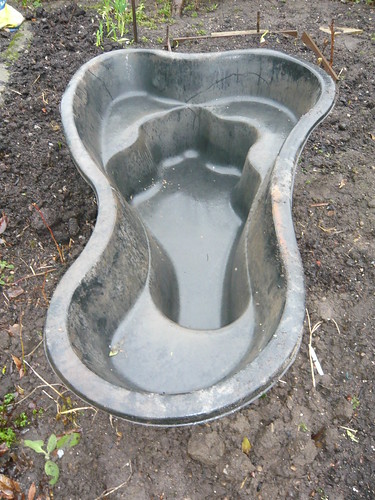
Pond

Ponds come in many shapes and sizes, I particularly like the kidney shaped version of this preformed rubberised plastic.
Cheaper versions are now on the market made from blown plastic that is not as rigid but is suitable for smaller preformed shapes.
Of course if you want a bespoke shape you can use Butyl liners, fiberglass, concrete or even clay.

Tips For Installing Ponds

  • Avoid sharp edges and stones by lining the base of the hole with sand.
  • Beware the weight of water will push a preformed pond deeper so make sure the base is firm and well packed.
  • Ensure the pond is level as the water will highlight any errors, slopping over one side and leaving a gap at the other.
  • Make a beach area at the edge of the pond so wild life can access the water without needing to jump off the rim or edge.

Tips from Wildwoods

Read the rest of this entry »


Oak Garden Furniture

Posted: February 25th, 2011 | Author: hortoris | Filed under: Products | No Comments »

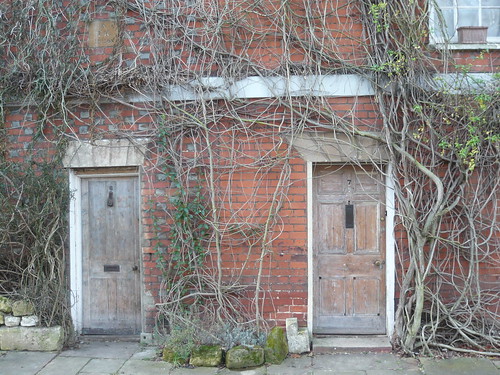
oxford 121

Oak is a perfect wood for use with substantial garden furniture. These terrace houses in Oxford have had doors that have stood the test of time.

Benefits of Oak

  • Oak is long lasting and matures well into the garden surroundings.
  • It matures into a pale grey colour
  • Oak doesn’t need oiling or special treatment to be weather proof
  • It is a natural resource that has been used in construction for centuries.
  • Reclaimed Oak timber can be found at architectural salvage merchants.

Uses of Oak in The Garden

  • Benches and seats made of Oak are sturdy and popular.
  • Solid square or rectangular blocks can be used for seating or as sculptures. I like those that have been carved with a poetic saying.
  • Planters look good made from oak slats. I would not waste expensive Oak on building a raised bed but if it enhances the visual amenity then give it a go.
  • See products at Oak Cubed

Mini Tripod for Flower Photos

Posted: February 21st, 2011 | Author: tejvan | Filed under: Uncategorized | 1 Comment »

Crocus

A simple but very effective way to take better photos of flowers is to invest in a mini tripod.

This enables a steady hand and the ability to get sharper pictures. It also enables you to use a wider field of focus and slow shutter speed without blurry photos.

To get even sharper photos you can use the shutter delay function on your camera. This means it takes 2 seconds to take photo after pressing the button. This means you don’t shake the camera when pressing the button.

The tripod is easily manageable and bendable. The only downside is that you may have to get low down to operate it. Just think it is like weeding on your hands and knees. However, getting to ground level helps take interesting flower photos as you taken at the height of the flower rather than looking down.

At only £12, it’s not a big investment but can make a big difference.

Read the rest of this entry »


Leaf Collectors

Posted: February 18th, 2011 | Author: hortoris | Filed under: Tools and Equipment | No Comments »

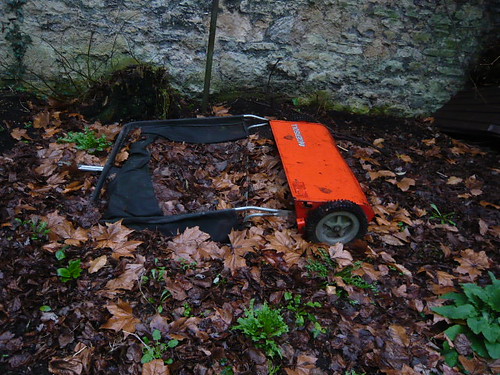
Leaf collector

In February it is the last chance to clear up any leaves that are gathered in corners or under hedgerows. Wet and soggy leaves will decay and it is natural to allow them to return to the soil unless they are in the wrong spot such as on a lawn.

Leaf Mold or Rotting Leaves

  • Rotting leaves have negligible food value but attract worms.
  • When collected, leaves are best left to rot down for longer than normal compost at least 2 years. For that reason they should be kept separate in a wire leaf bin or a black plastic bag with air holes.
  • Rotting leaves do not get hot like compost.
  • When well rotted the leaf mold can be crumbled and used as a seed/potting compost.

Collecting Leaves

  • A spring tined rake is used for small areas, possibly with  plastic hands to pick the pile up for bagging.
  • A lawn mower can pick up many leaves off a lawn and shred them. Shredders are an optional extra on some lawn mowers.
  • The picture is of a gang mower device for collecting leaves off a large grassed area. The leaves look like they are collecting themselves.
  • Leaf blowers and vacuums are a more expensive but efficient way of collecting your leaves.

Book Cover
Read the rest of this entry »


Sprayers for Garden Spraying

Posted: February 11th, 2011 | Author: hortoris | Filed under: Tools and Equipment | No Comments »

flit gun

Many older fashioned insecticides and fungicides are now banned by EU regulation but a sprayer is still a gardeners friend.
An old flit gun like the one above will not improver the efficacy of your spraying but it will be a pleasure to use on pesky insects and bacteria.
I happily use a spray gun for foliar feeding my plants.

Features of a Good Sprayer

  • A good sprayer need to have a fine and adjustable nozzel to regulate the amount of fluid distributed. A good arrangement will range from a pencil jet to a wide spray.
  • A lance to direct the spray to the underside of leaves is a boon.
  • Modern sprayers have a safety valve so you can’t over pressurise the container.
  • The sprayer needs to be easy to clean as you do not want a build up of chemicals from one spray to the next.
  • Graduated filling marks help to achive accurate mixing.
  • A lockable trigger maintains the spray for prolonged use.
  • As liquids can be heavy I would opt for a carrying harness if I was buying a larger capacity sprayer.
  • Hand held sprayers are fine for indoors and small areas.

Book Cover

this Hozelock Killaspray has a 3 litre Net Capacity leaving 2 litres for building the pressure. It costs about £22 from amazon


Bird Boxes and Nesting

Posted: February 10th, 2011 | Author: hortoris | Filed under: Projects | No Comments »

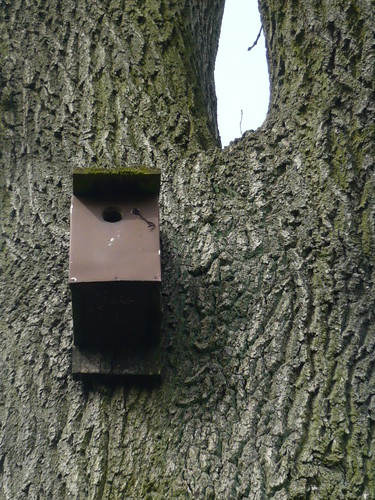
Bird box

Now is a good time to add to the bird boxes in your garden.

  • An open box has most of the front missing to attract Robins, Pied Wagtails, and Redstarts. Place 5′ or higher and close to a hedge.
  • With a box containing a small circular hole cut in the front it is the size of the hole that determines which bird is most likely to take up residence.

25 -28 mm for Blue Tits and Great Tits
32 mm for House Sparrows
45 mm for Starlings

  • I have a ‘Roosting pocket’ are made from natural materials (coconut fibre), to provide a place for birds, particularly wrens, to shelter.
  • The nesting boxes and  pockets are best placed in a quiet, sheltered spot – away from direct sunlight and prevailing winds and rain.
  • Owl boxes need to be over 15 feet high like the photograph.
  • Hung on a north facing wall or in a shady tree the box will remain cool as the weather warms in the spring.
  • It seems obvious to put boxes out of reach of any predators, particularly cats.
  • Position boxes away from bird feeders as the nesting pair will be constantly chasing the feeding birds away from their territory!
  • If building your own box use untreated wood.

« Older Entries
Newer Entries »
  • Best of Gardeners Tips
  • Top 100 Gardeners
  • Gardening at Amazon.co.uk
  • Seeds at Thompson & Morgan
  • Jersey Plants Direct

Categories

  • Art
  • Books & Publications
  • Clothing
  • Constructions and Greenhouses
  • Garden Economics
  • Growing Aids
  • Pests and Problems
  • Products
  • Projects
  • Seeds and Plants
  • Tools and Equipment
  • Uncategorized
  • Weeds and Treatments
Gardeners Tips