Gardening Products

Tips for the Gardener

Gardeners Special Offers

Posted: May 2nd, 2011 | Author: hortoris | Filed under: Uncategorized | No Comments »

Pansy

Special Offers for Gardeners

Internet traders and retailers of plants and seeds start making special offers of plug plants around the beginning of May. They have grown to order but added some extra stock for sale and will put deals and discounts together. It can be a cost effective way of getting more plants.

Newspapers are regularly making up special offers. They usually involve buying several items of one species in several colours or varieties at a bulk price. Distributors need a minimum order value to make a deal worthwhile.

At the end of any selling season special offers and discounts are used to liquidate stock. As long as the timing is not too bad you can make some good purchases. I particularly look for Tulips sold in October/November which is the time to plant them anyway yet retailers want the space for Christmas stock.

Horticultural societies are a good way to buy your dry goods, chemicals, fertilisers and composts at a discount. It is well worth the cheap membership fee for good advice and better prices. Many get funds or discounts from bulk seed purchases by adding members deals together.

Casual retailers at car boots, open gardens and special plant sale events can be a good source of new plants.

Tips on Special Offers

  • Every retailer is looking to make a profit. Caveat emptor means buyer beware.
  • Do not buy plants that look like they are dead, diseased or past their sell by date.
  • I particularly dislike vendors who sell plants that are finishing flowering and will not flower again.
  • Seek value for money by considering growing from cuttings, seeds or scrounging gifts.
  • Try not to buy what you don’t want. I overfil my garden every year and always have more than I need or the garden can cope with.

Special offers link to Thompson & Morgan

Gaudy Garden Ornaments

Posted: May 1st, 2011 | Author: hortoris | Filed under: Art | No Comments »

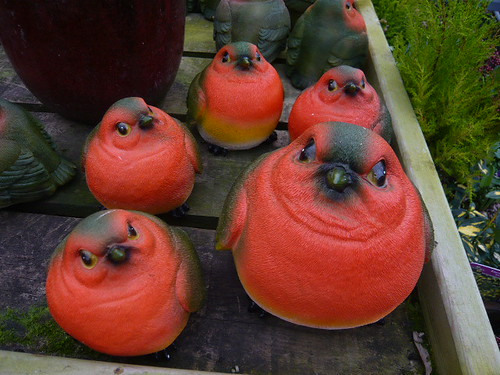
Robins

I liked this picture of Robins but I do not intend having them in my garden. They might frighten other birds and or my wife. On second thoughts….

I shouldn’t complain I have two ornaments that are plastic birds on sticks whose wings flap in the wind.

Amazon have a heron and many other ornaments available here

Visit the Gnome reserve in North Devon

See images of Gnomes from Google

If you are not afraid of Gnomes there is their naughty site to look at


Unwanted Garden Dogs Cats & Other Animals

Posted: April 30th, 2011 | Author: hortoris | Filed under: Pests and Problems | 1 Comment »

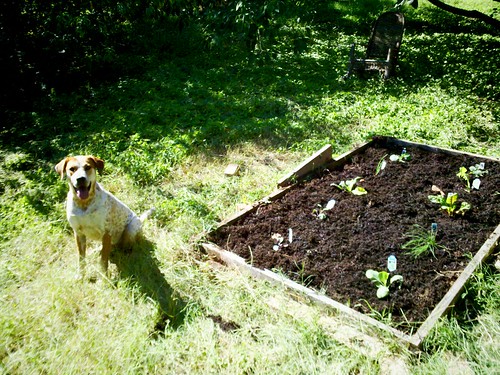
Dog vs Garden - Year II

Some pets like dogs and cats plus other animals can be a pest in the garden.
Their crimes are eating the wrong thing, digging in the wrong area, turning grass brown with urine and leaving a mess.
The worst offenders are rabbits, cats, mice, deer, pigeons and dogs including foxes.

Animal Deterrents

  • Cats and dogs scrape and dig often in the friable soil where you have planted precious seedlings. They can be frightened off with a sonic sound device like the one above.
  • Scent can scare off many animals. Old wives tales of lion or elephant dung may be far fetched but Retnardine sprayed on seems to work.
  • Rabbits and deer can be fenced out of your garden with special mesh, wire or high fences. That way the pesky blighters will go elsewhere for breakfast.
  • Birds are scared off brassica crops by special scarers, scarecrows or more effectively by netting and string.
  • Mice have eaten lots of my bulbs this year and when I plant new ones I will put a mesh over them before the soil is replaced as protection.
  • Rats I have had to poison as they bred around my compost heap.
  • Slugs are  a whole new ball game

Animal repellers from Amazon
Book Cover
Sonic Repeller

I was asked about dog problems at our local crown green bowling club. Apart from the treatments above the only answer would be a 24 hour patrol!

Credits
Dog vs Garden – Year II by Todd Dwyer CC BY-SA 2.0 ‘It looks like the dog is ahead on points.


Gardening Book of the Month April 2011

Posted: April 30th, 2011 | Author: hortoris | Filed under: Books & Publications | No Comments »

Book Cover

Joe’s Urban Garden Handbook by Joe Swift

In a book that may appeal to ‘ladies who garden’ Joe Swift shows how to create an area that meets your practical and style requirements whilst making the best use of every inch of available space.

In a related book Joe’s Allotment: ‘Planning and planting a productive plot’ is a more earthy approach rather than a functional design book.

Joe packs in loads of ideas for postage stamp sized gardens into the Urban Garden Handbook including;

  • multi-tiered,
  • decking,
  • paving and dining-friendly chill out zones
  • as well as a  helpful guide on what to grow where.

Joe Swift Brief Biography 1965

  • Joe is an English garden designer and author
  • Joe Swift is the son of author Margaret Drabble
  • Over 12 years, Joe has designed many gardens on TV, including several for Gardeners World
  • Joe writes for Gardeners World magazine, has a regular column in The Times and various magazine and newspaper articles.
  • He has written 3 books- ‘The Plant Room’, and ‘Joes Urban Garden Handbook’, and ‘Joe’s Allotment’ published in April 2009.
  • Joe is involved in many charities and is currently President of the National Gardens Scheme.
  • Joe regularly gives talks on garden design, has hosted many live events and also gives after dinner speeches. link

Amazon link to Joe Swift


Sphagnum Moss for Gardeners

Posted: April 30th, 2011 | Author: hortoris | Filed under: Growing Aids, Uncategorized | No Comments »

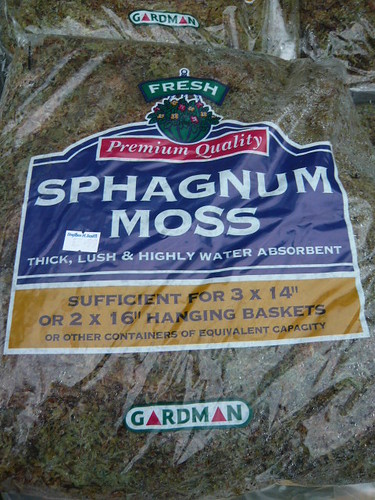
005

Features of Sphagnum Moss

  • Sphagnum moss is a great liner for hanging baskets.
  • It holds a large quantity of water and is easy to wet
  • The moss is very slow to rot down.
  • Sphagnum moss is light and easy to work with.
  • In bogs, sphagnum moss compacts down over the years to create peat.
  • Florists use sphagnum moss to make wreaths.

Other uses of Sphagnum Moss


  • As a mild antiseptic that inhibits bacteria growth, Sphagnum moss has some medicinal uses.
  • It was used in massive quantities for dressing wounds during World Wars I and II.
  • Sphagnum has traditionally been used for bedding, to pack wall cavities and it has been used to caulk boats.
  • Sphagnum was once used as an ingredient in bread and provides the peaty flavour of whisky.


Sphagnum moss products
from amazon


Garden Equipment For Children

Posted: April 29th, 2011 | Author: hortoris | Filed under: Projects | No Comments »

Trampoline

What garden equipment attracts children of the current generation?

  • The swing was the most popular piece of equipment until recently when trampolines became more popular.
  • Tree houses and dens made from existing resources rather than purchased have enduring charm and fit into the rest of the garden without jarring too much. If you can accomodate bird and insect homes why not have an area for the kids.
  • If young footballers keep missing the net you can be sure the ball will hit a precious plant. Unless that is, you have the space for a large lawn with a hard surface surround. More damage is done recovering balls fro herbaceous borders so plant tough items like geraniums, hemerocallis, bay and box.
  • Sand pits are great for the very young. Buy fine sand not the yellow staining sort of builders sand.
  • With a suitable wall you can paint wickets or goal posts and even mount a hoop for netball.

Water for Children

  • Safety is important for younger children. Do not leave them alone near water.
  • A rill can be fun. A shallow stream or channel of running water fed from a sump.
  • If you have a pond you can fit a black metal mesh just under the water surface and it will be virtually invisible.
  • What about a board walk over a marshy area. Not as much fun perhaps as a paddling pool that needs to be emptied when the adults are not around.

Tree and Play Houses

  • If you do not have a large sturdy tree you can build one on posts hidden by the branches of a smaller tree.
  • Keep kids interested by adding to a tree house with ropes, hammocks, walkways or other features.
  • If you are handy you could mount a tree or play house above a garden shed
  • You can buy a large range of tree houses see amazon

Trampolines from Amazon
Swings from Amazon


Trampoline photo from Darkjoe on flickr using creative commons license


Round-up on Uses of Roundup

Posted: April 29th, 2011 | Author: hortoris | Filed under: Products | No Comments »

Book Cover

Roundup Weedkiller concentrate.

Links to reports on main uses of Roundup

  • Best Weed Control
  • Weed Killer for Dandelions
  • Best Weed Killers
  • Control Invasive Weeds
  • Horsetail or Mares Tail Erradication
  • Control Convolvulous

Roundup

  • Roundup is a strong weed killer particulaly good on hard surfaces like paths.
  • It is absorbed by the leaves and moves throughout the entire plant, above and below ground, to destroy annual and deep rooted perennial weeds, including grasses, dandelions, docks, bindweed and thistles.
  • It is inactivated immediately on contact with soil and is then broken down by soil micro-organisms, to allow replanting.
  • Roundup kills grass so do not use on lawns.
  • Do not get roundup spray on your favourite plants or it will kill them too.

Roundup Tree Stump and Root Killer

  • Roundup Tree  killer is used on unwanted vegetation including trees and freshly cut tree stumps.
  • It kills trees, stumps, brambles, nettles, deep rooted and woody weeds, including Japanese Knotweed and Ground Elder.
  • More than one application may be needed on deep rooted weeds like knotweed.

Seed Trays

Posted: April 22nd, 2011 | Author: hortoris | Filed under: Growing Aids | No Comments »

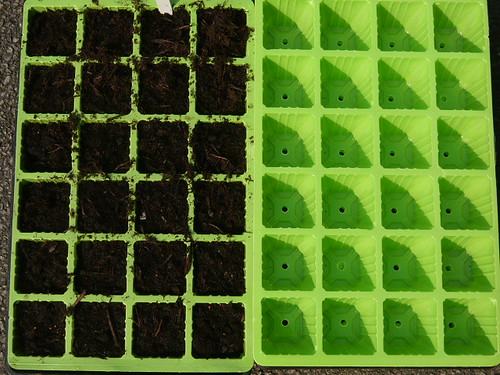
Plastic seed trays

Seed sowing is reaching its height in the middle of April. It is worth looking at the labour saving devices that were not available to our parents and grandparents.

Seed Tray Review

  • Old wooden seed trays with slats and high sides are still in use. They need care when cleaning before new crops are sown.
  • Plastic seed trays from rigid polypropylene with drainage holes can be used time and again and are easy to store and clean. There is generally a pattern of ridges to improve drainage.
  • I like to use the thin plastic segmented inserts inside a normal seed tray like those in the photograph.
    • They are cheap enough to be disposable but last a couple of seasons with care.
    • They vary in the number of cells, 3×5, 8×5 or 4×6 for example.
    • Each cell can be for individual seeds or used for several fine seeds. It makes pricking out and planting far easier.
    • The cells can also be used for growing on after pricking out. 15 or 24 good plants can be raised in one tray.
    • Do not put plastic inserts in a tray without drainage holes or the compost may get water logged.
  • Seed trays can be used to hold individual pots in one place. Up to 15 square 3″ pots can be put in one tray and they are a bit deeper than a standard tray.


Amazon supply seed trays in a variety of sizes and packs click here
Thompson & Morgan have a smaller selection of seed trays. Strange for a seed merchant I think.


Seed Tray Tips

  • Take care when watering to get all the area damp. Be careful with small cells and those near to the drying sun.
  • Label your seed sowing with the date and type of seed sown.
  • Sterilise your used seed trays in Jeys fluid or similar
  • To water from the bottom fill a larger container and stand the tray in the water until enough has been taken up.
  • Do not leave seedlings too long before pricking out. Long roots soon become stunted.
  • Carefully push out the cell contents from the bottom if using this product.

Stone Chippings and Grit

Posted: April 21st, 2011 | Author: hortoris | Filed under: Projects | No Comments »

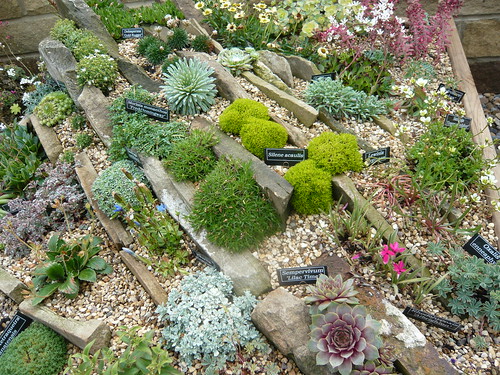
alpine  scheme

Uses of Grit and Stone Chippings

  • Decorative features on paths and patios.
  • Alpines and rock gardens need grit for drainage and chippings can add a nice decorative finish.
  • Add to the top of pots to retain moisture and improve general appearance.
  • Top off  newly sown alpine seeds to prevent water washing seeds away.
  • Chippings deters weeds on beds and borders when used as a mulch.
  • Also good for topping pots indoors.
  • Deters moss and algae from growing.
  • Grit and sharp sand improve drainage and help breakdown heavy clay soils.

Yorkshire cream coloured stone chippings in very large bags from amazon. They are about half to one inch sized chips or 15-25mm of creamy stones. A large bag will cover approx 15 square yards at 2 inches deep.


Read about Alpine Plunge beds or about Creative Mulching


Moss Problems and Cures

Posted: April 20th, 2011 | Author: hortoris | Filed under: Products | 1 Comment »

077

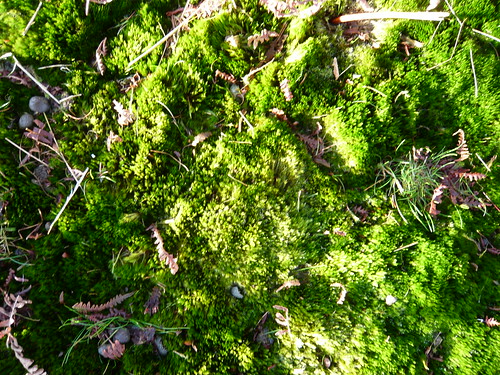
Moss is fine in the right place.

Growing on rocks in the shade or in a cool geen environment like a Japanese style garden moss may be a worthwhile plant to grow.

Moss in the wrong place can be a nuisance depriving other plants of light and nutrients.

  • Moss in a lawn is one of the worst instances of moss problems. The moss may look green when the ground is damp but it soon looks unsightly when it dries out. By this time the grass is thin or none existent.
  • Moss seems to grow on the top of many of my overwintering seed trays and pots. The extra nutrients make an ideal home base for the moss and it smothers out any seedlings.
  • Moss in the flower beds is caused by poor drainage and damp, dingy conditions.
  • Moss on paths and pavements can be slippy. see also

Causes of moss include poor drainage and excess damp. This is often exacerbated in lawns by compacted soil where air has been trodden out of the lawn.

  • Dark, damp and poor watering can cause moss as can excess nutrients. You may have seen how yogurt painted on to a stone encourages moss to grow.
  • Infection by spores from other moss plants. Moss will not compost and needs to be buried to kill it off.

Moss Prevention and Cure

  • Aerate the soil, hoe or spike the ground to allow air to enter.
  • Avoid standing water and boggy ground.
  • Use clean water for seedlings not infected water-butt water.
  • Lawn treatments include liquid or granular applications of chemicals.
  • Lawn sand can be spread and is gritty silver sand with sulphate of iron and sulphate of ammonia blended in.
  • Read controlling moss in lawns
  • A good range of Moss Killers are available from Amazon

« Older Entries
Newer Entries »
  • Best of Gardeners Tips
  • Top 100 Gardeners
  • Gardening at Amazon.co.uk
  • Seeds at Thompson & Morgan
  • Jersey Plants Direct

Categories

  • Art
  • Books & Publications
  • Clothing
  • Constructions and Greenhouses
  • Garden Economics
  • Growing Aids
  • Pests and Problems
  • Products
  • Projects
  • Seeds and Plants
  • Tools and Equipment
  • Uncategorized
  • Weeds and Treatments
Gardeners Tips