March 6, 2010 at 2:06 am
· Filed under Alpine Garden

Collectors of Snowdrops are named Galanthophiles so should crocus lover be called Iridiaphiles. Perhaps there are already Iridiaphile clubs collecting the numerous Crocus species including the Corsican Crocus shown above. Wikipedia list 80 plus species.
Gardeners Tips for Corsican Crocus
- I like the idea of growing crocus in pots in the alpine house so it is easier to inspect the blooms but they ‘go over’ quicker and the water control needs to be spot on. This pot is stood on an inverted pot to get more height on the bench.
- Corsican crocus are best in a rockery not being robust enough to grow through grass.
- A sandy well drained soil even in an exposed site should be fine.
- Outdoors they go on flowering for longer than many spring crocus.
- In early spring is a delight to see the striped buds poking up followed a few days later by the open buds showing a contrast of purples and lilacs plus the sepals, styles and anthers in orange and yellow. .
Permalink
March 5, 2010 at 3:52 am
· Filed under Gardening

If you want an informative label on your plant you can do a lot worse than go to Kew gardens. This fulsome label informs and educates the visitor about the periwinkle or dogbane that is currently in flower. Catheransus roseus or Madagascar Periwinkle’s alkaloids have contributed to 70 different drug formulations from this one plant species.

Below is the more normal horticultural label for the same plant. The family name is top right – Apocynaceae or dogbane is a family of flowering plants that includes trees, shrubs, herbs, and lianas. often found in tropical rainforests, and most are from the tropics and subtropics. Some are perennial herbs from temperate zones and many have milky sap that make them poisonous if ingested. Vinca major and minor are part of this family.

Permalink
March 5, 2010 at 12:00 am
· Filed under Garden Design

Undulating shapes and sizes in an attractive outline help to create a flourishing and sophisticated design in a garden. By varying plants and grass shapes in your landscapes you can create a lively scene.
There is no end to the combinations you could select but below is one option.
Simple Contrasting Foliage
Miscanthus sinesis Graziella is a vigorous ornamental, clump forming grass with bold narrow leaves that grow to 4 feet high. It is well behaved and will not spread and has showy white flowers at the end of the season.
Variegated foliage can add a new visual dimension and the white striped leaves of Gardeners Garters Phalaris arundinacea Picta has floppy to arching leaves that can be stricking. It is a bit of a thug spreading rapidly in damp soil but you can plant it in a buried pot.
The Solenostemon family of Coleus have a wide range of colours often on the same soft leaf.
For mobile grass try Pennisetum alopecurides the Fountain Grass with seed heads that can reach 3 feet high.
Artemesia stelleriana has silver-grey leaves through out the year.
In this selection I have avoided plants grown primarily for their flowers. However if you wanted to intersperse just one flower then a Hemerocallis ‘Imperial Lemon’ may suit the situation.
Permalink
March 4, 2010 at 9:54 am
· Filed under Flowers and Plants

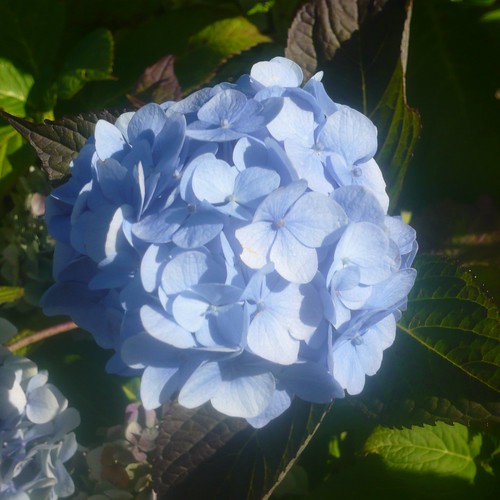
True blue is not a colour that is all that common in the garden. Doubtless you have your blue favourites but these two photographs caught my imagination.
Close inspection of a bloom is often repaid by new insights into a plants capability. I particularly like veins and the shadow of the stamen on the Geranium.

Thanks to FMC and flickr for the Creative Commons License.
Permalink
March 4, 2010 at 2:23 am
· Filed under Fruit, Vegetables & Herbs

Salad is a diverse name covering any of a wide variety of dishes including, green salads, vegetable salads, salads of pasta, legumes, or grains; mixed salads incorporating fruit and fruit salads. They include a mixture of cold or hot foods, often including raw or sometimes cooked vegetables and/or fruits.
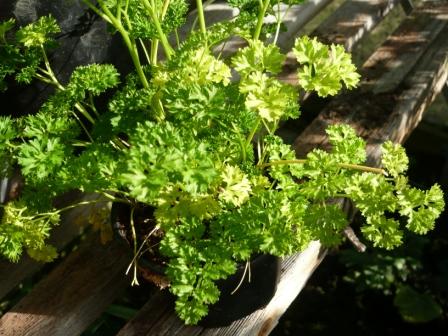
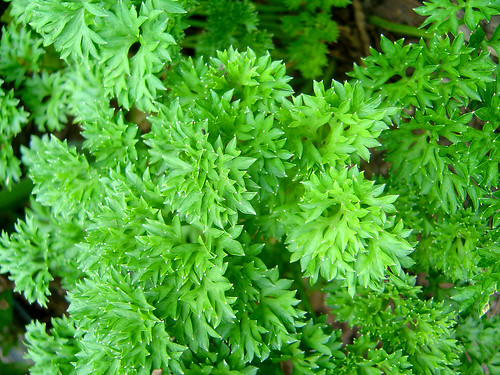
Alternatively ‘Salad’ is any green plant or herb used for such a dish or eaten raw so that is the part we will concentrate on.
Leafy Salad Plants
Lettuce is available in many varieties with popular types like Cos, Butterhead, Crisphead, Lollo, Oak leaved or loose leafed. The coloured varieties above are called Bijou and Freckles. Buy a mixed packet of seeds and eat young seedlings as a way of thinning out crops.
Chicories are popular in supermarket mixes and easy to grow for summer-winter supplies, try Red Hearted or Sugar Loaf Jupiter F1. Hugh Ferrnley Whittingstall explains ‘the pale green-white, tight little missile-shaped leafy vegetable, not the blowsy, tangly, frizzy salad leaves that share its name. There is plenty of confusion here: what we call chicory, the French call endive; what they call chicorée frisée, we call curly endive. The Belgians, with pragmatic Flemish accuracy, call it witloof, or white leaf.’ so I hope that is clear there will be a test at the end. Thompson Morgan sell half a dozen varieties
Endive with broad leaves or curly leaves are good and crisp and can be used as cut and come again salads. Indivia D’Estale A Cuore Giallo can be grown from seeds .
Cabbages are used in coleslaw and most varieties are good shredded in a salad. ornamenta cabbage can be eaten and the leaves add colour to a salad try Pink Beauty, White Christmas or frilled leaved Wave and Feather.
Oriental salad leaves include Chinese cabbage, Pak Choi and Mustard spinach (Komatsuna). Most of these are members of the brassica family. Mizuna hybrids Tokyo Beau and Tokyo Belle are recommended as is Mibuna Green Spray.
Leaf Beet and Swiss Chard is adaptable and young leaves can be picked for most of the year.
Spinach is fine in a salad particularly if you rip up the leaves into manageable chunks.
Strong Flovoured Leaves
Read the rest of this entry »
Permalink
March 2, 2010 at 4:45 am
· Filed under Flowers and Plants, House & Greenhouse plants

At the weekend I visited Bramhope and the local Orchid show. I guess I could post quite a few pictures of Orchids but the grounds of the hotel were full of Snowdrops hence the photo above.
Wether it is growing naturally outdoors or displayed indoors the visual impact is one of the key areas where we seek perfection.The way an item is displayed or shown to others is one of gardening’s greatest skills.
So I have succumbed with these display shots

The host societies display in the main room.
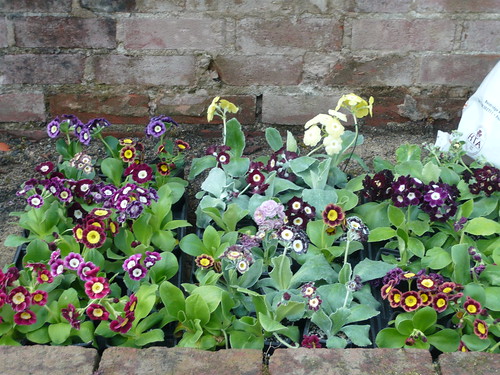
The display case below had a deep recess but with a matt black backing it looked more like a picture frame. Also ideal for Auriculas I would imagine.

For me and many others visitors to the show it was the scented Orchids that seemed to attract the most attention. For me the star of the show was Dendrobium kingianum with a very strong hyacinth-type scent to the flowers. The flowers were less than an inch across and pure white with a hint of purple.
Dendrobium like plenty of bright filtered sunlight but not direct sunlight that may burn the leaves. They can be difficult to re-flower if they do not receive sufficient light.
Permalink
March 1, 2010 at 7:14 am
· Filed under Flowers and Plants

If you ever doubted that Orchids were an International passion just look at some of the speakers who have visited The British Paphiopedilum Society recently.
Dr Phillip Cribb (Royal Botanic Gardens, Kew, UK), Frank Smith (Krull-Smith Orchids, USA), Masayoshi Takahashi (Tokyo Orchid Nursery, Japan), Jerry Fischer (Orchids Ltd., USA), Dr Guido Braem (Schlechter Institut, Germany), Roelle Van Rooyen (Van Rooyen Orchids, South Africa), Prof. Leonid Averyanov (St. Petersburg, Russia), Jim Clarkson (University of South Florida Botanical Gardens),Joan Elvin from South Africa spoke about Paph. fairrieanum and Ernst Gunzenhauser based in Gelterkinden, Switzerland, which has been running his own company since the 1930s.
Societies and Shows
American Orchid Society www.orchidweb.org
British Orchid Council www.british-orchid-council.info
Orchid Society of Great Britain www.orchid-society-gb.org.uk 24th April 2010 Spring show
Read the rest of this entry »
Permalink
February 28, 2010 at 8:22 am
· Filed under Garden Equipment Tips

I have always wanted a new way to kill the slugs in my garden and now I have discovered how. The ‘old mangle trick’ seems to be the one for me, put the slug between the rollers and give the handle a good old turn.
Environmentally friendly (if not in the slugs mind) this mangle uses no chemicals and causes no CO2 emissions. Slug juice can be caught in the green urn and bits removed with a pointy stick provided.
If you are squeamish or squashist then you will have to resort to the blue pill (I mean pellet). Available from slug lovers Amazon
Permalink
February 28, 2010 at 7:20 am
· Filed under Gardening

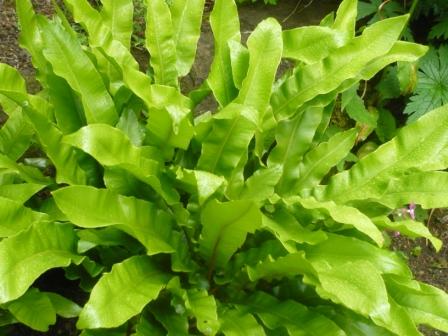
Asplenium scolopendriums or spleenworts are a good contrast plant in a shady fern border. The shape of the long evergreen fronds gave rise to the common name Hart’s Tongue Fern.
Growing Hart’s Tongue Ferns
- They provide year round interest being ferns with simple, undivided fronds. The leaves are 4-24 ” long and 2-3″ broad.
- Once planted, hart’s tongue fern grows slowly and needs little attention apart from annual mulching and tidying in spring.
- Plants grow on lime-rich substrates including moist soil and damp crevices in old walls, most commonly in shaded situations.
- In sunny sites the leaves turn a sickly yellow.
- They are not suitable for growing in pots and containers.
Varieties of Asplenium
- Crispum group have fronds with crimped margins making them appear plumose or feather like. Boltons Needle is one specific form.
- Asplenium scolopendrium muricatum has narrow dark green fronds with raised wrinkly edges.
- Asplenium trichomanes have glossy green oval, pinnae paired along the length of a purplish stem. Ideal for walls and crevices.
- Asplenium scolopendriumLaceratum Kays is a form with wide open, ovate fronds with deeply cut margins and miniature crested tips.
- See others at World of Ferns
In the Yorkshire Dales National Park the ferns make an important contribution to the local flora. Hart’s-tongue fern is shade-tolerant and prefers lime-rich soils and can be found in dark and damp environments including the grykes of limestone pavements.
Permalink
February 28, 2010 at 1:48 am
· Filed under Flowers and Plants

Dahlias in the Bishop series have the darkest leaves and produce an abundance of flowers through to the first frost. All are single of semi-double flowering but the colour scheme varies as many were grown from seed. Bishops Children are open centered dahlias.
Bishop of Llandaff the old favourite that found new favour after a Chelsea show (AGM 1928). They have dark bronze-green foliage and vibrant red semi-double blooms.
Bishop of York is a bright yellow with a single layer of petals.
Bishop of Leicester is a pale pink with yellow collarette in the open centre.
Bishop of Canterbury is a cerise or dark pink colour.
Bishop of Oxford is a personal favourite with a strong orange coloured bloom.
You can grow a range of dark leaved Dahlias from seeds in a packet named Bishops Children from Thompson Morgan for £2.99. Or annual Dahlias with dark foliage Dahlia variabilis Redskin for £2.69.
You can also buy a collection of these Dahlias from the Daily Telegraph
See also Red Hot Dahlias at Gardeners Tips and Dahlias a History
Seed Cultivation Instructions
A fiery mix of such striking colour, yet with the innocent flower faces of Bishop’s Children. Mid-height, and blends extremely well into borders. However, be warned that a colour eruption may occur! Spectacular in bedding and containers, and as a cut flower.
Read the rest of this entry »
Permalink